“We may not have certainty to what extent terrorists seek to acquire weapons of mass destruction, but the consequences of an attack would be horrible”, says Adriana Volenikova, Associate Project Officer in the OSCE Conflict Prevention Centre (CPC). “We must do what we can to keep these weapons out of their reach.”
Since 2010, Adriana has managed projects that support OSCE participating States with the implementation of United Nations Security Council Resolution 1540 (2004). The Resolution aims to prevent individuals and terrorist groups from laying their hands on nuclear, chemical and biological weapons. In the past few years, the OSCE has supported Kyrgyzstan, Tajikistan, Uzbekistan and Turkmenistan with the development of UNSCR 1540 National Action Plans that set priorities for the implementation of the resolution. Now, the focus of its assistance is on building capacity in export and border controls.
The background to UNSCR 1540
The adoption of United Nations Security Council 1540 in April 2004 was the international community’s response to the uncovering of a nuclear smuggling network in late 2003. Led by Pakistani nuclear scientist Abdul Qadeer Khan, the illicit network had managed to provide Iran, Libya and North Korea with nuclear expertise and equipment by exploiting the loopholes in the export control systems of several countries in Africa, Asia and Europe. The discovery of the network’s dealings raised awareness of the need to control the supply chains of materials and technologies that can be misused for the construction of deadly weaponry.
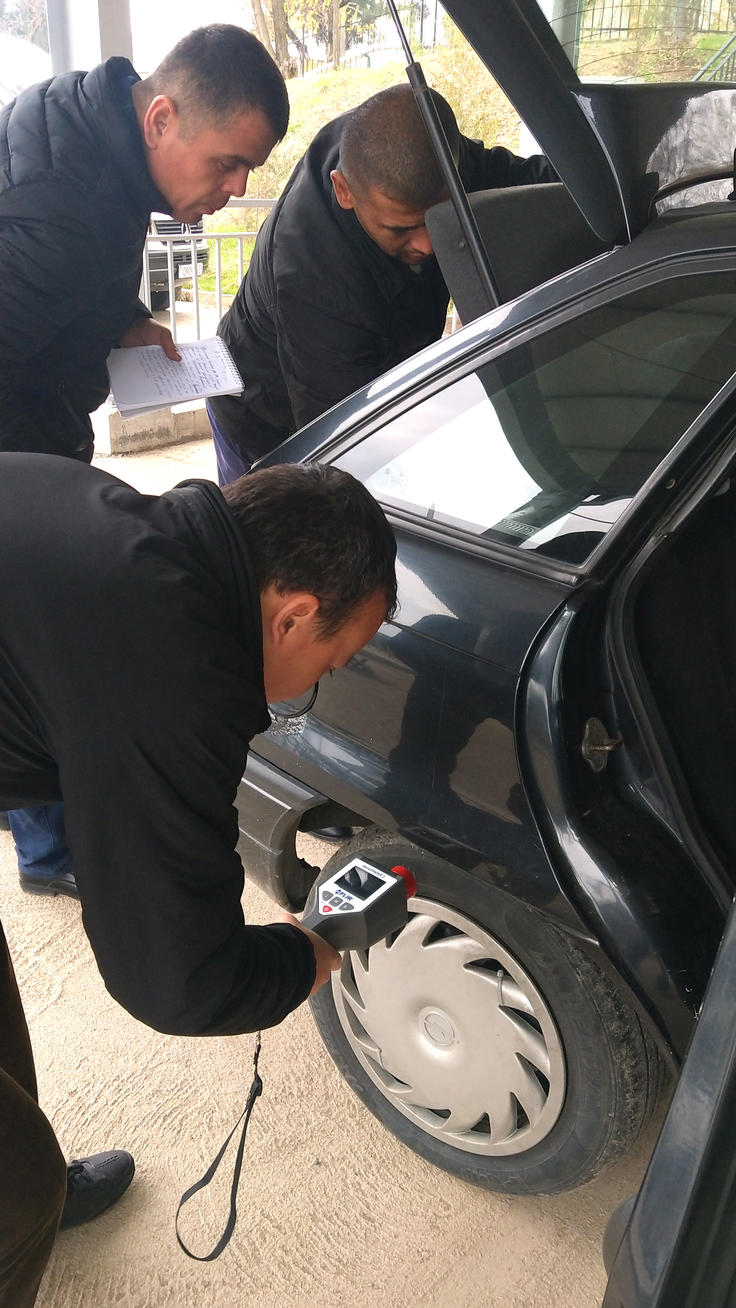
Participants during a practical session of a training course on the identification of hazardous materials, Dushanbe, 28 November 2018.
UNSCR 1540 requires states to control the export and transit of any materials and ingredients that could be exploited for the manufacture of nuclear, biological or chemical weapons. These goods must be determined and named in control lists so that their production, use, storage and transport can be regulated. While the process may seem relatively straightforward, it raises issues related to the so-called dual-use items — products and technologies, which are normally used for civilian purposes but may also have military applications.
“Dual-use items can be difficult to control because their use is perfectly legitimate and innocuous in a commercial setting but dangerous in a military context. High strength steel for example is a material that is commonly utilized in construction or the automotive industry. It can, however, also be used for uranium enrichment centrifuges,” explains Anton Martyniuk, a non-proliferation expert. “An example of a chemical dual-use good is chlorine: It is a widely used solvent and keeps swimming pools free from bacteria but it can become a devastating chemical weapon when used for military purposes.”
Dual-use goods are regulated through an export control regime, a policy area that typically involves many different governmental authorities, from licensing authorities, ministries of economy, trade, foreign affairs, defense, to customs and intelligence agencies. The OSCE supports the organization of joint meetings for all these agencies to develop legislation and agree on a division of labour and operating procedures for information exchange.
Involving all the relevant national stakeholders in the process of developing laws and regulations is essential to ensure that all relevant agencies are engaged and work together towards the same goal of non-proliferation. The OSCE plays a facilitating role in that regard and brings in international experts who can share good practices from other countries.
Robin MossinkoffSenior FSC Support Officer in the CPC
Equally important is co-ordination at the regional level because the efficiency of export control ultimately depends on a consistent application. Mossinkoff explains that: “Non-proliferation controls must be implemented by all states to avoid that non-state actors try to shop for dual-use items until they find a supplier with porous domestic controls. Fostering regional co-operation in implementing UNSCR 1540 is an important step in making sure that states work together to control supply chains across borders.”
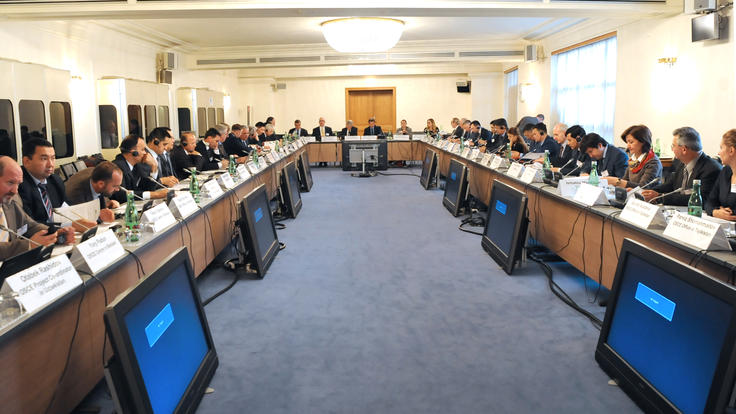
In Central Asia, the OSCE supports a regional approach to UNSCR 1540 implementation by bringing together licensing, customs and other governmental authorities from Kazakhstan, Kyrgyzstan, Tajikistan, Turkmenistan and Uzbekistan. In roundtable discussions and workshops, they develop streamlined procedures for the development of control lists, the transit of controlled commodities and exchange of information on licensing and risk. In co-operation with the United Nations Office of Disarmament Affairs (UNODA) and the United Nations Regional Centre for Peace and Disarmament in Asia and the Pacific, the OSCE holds regional peer-review meetings at which countries in the region can see how others have enacted the provisions of UNSCR 1540 and learn from their practices.
Participants of a Regional Workshop for Central Asian States on UNSCR 1540 Legal / Regulatory Requirements for Strategic Trade Controls, Vienna, 18 May 2016.
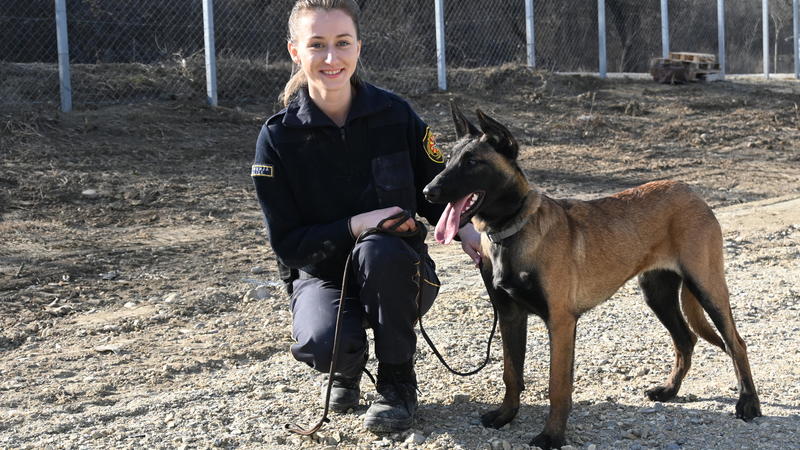
Once the legislation and procedures are in place, the challenge of operational implementation begins. Much of the OSCE’s focus in the area of UNSCR 1540 is therefore on capacity-building, be it by training frontline border and customs officers to detect chemical, biological, radiological and nuclear materials at border checkpoints, or by supporting national education and training institutions to prepare staff for the practical implementation of the legislative and regulatory frameworks related to the resolution.
In some cases, the capacity-building work is complemented with the provision of physical protection or detection equipment, such as in Tajikistan where the OSCE supplied radiation detectors and dosimeters for the identification and detection of nuclear and other radioactive materials at the border.
How is UNSCR 1540 implemented?
The implementation of UNSCR 1540 is monitored by the 1540 Committee who reports on progress against a standardized template, the so-called matrix. A Group of Experts assists the Committee in this task. In addition, states are obliged to submit their own reports about national implementation to the 1540 Committee. In 2011, the UN Security Council passed a resolution calling on regional organizations to provide states with customized assistance for an effective implementation of UNSCR 1540. The OSCE, as the world’s largest regional and security organization, responded to this call by providing capacity-building and assistance to OSCE participating States, and organizing country-specific and regional events. The OSCE closely co-operates with the 1540 Committee, UNODA, the UNRCPD, the IAEA and the OPCW.
2019 marks the 10th anniversary of the adoption of UNSCR 1540 and much progress has been achieved in terms of its application. At the same time, the international community cannot rest on its laurels, as Adriana underlines: “We must ensure that our current achievements are sustained and deepened and that we can adapt to new proliferation challenges that may emerge. Implementing UNSCR 1540 in order to prevent non-proliferation will require our continued attention and the OSCE remains committed to playing its part in the OSCE area.”
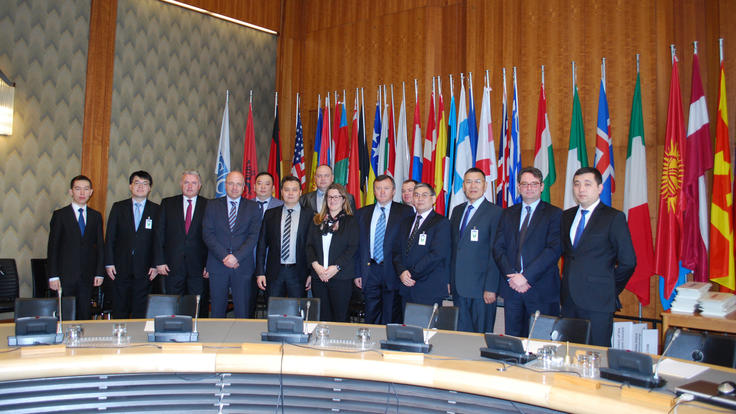
Participants of a round-table meeting to review Kyrgyzstan’s National Action Plan on implementing UNSCR 1540 (2004) co-organized by the UN Regional Centre for Peace and Disarmament in Asia and the Pacific (UNRCPD) and the OSCE, Vienna, 10 March 2017.
Disclaimer
The OSCE bears no responsibility for the accuracy, legality or content of the external site or for the content of the links provided.
OSCE Impact
Discover more stories about how the OSCE improves lives.