

Story
Women’s Peace Leadership Programme: Evgenija Krstevska, North Macedonia
- Date:
- Source:
- OSCE Secretariat
- Fields of work:
- Gender equality
A lawyer, environmental activist and passionate mountaineer, Evgenija dedicated her career to negotiating access to drinking water. Currently working with Helvetas Swiss Intercooperation, a Swiss independent organization for development, she is also a member of multiple global initiatives working on addressing key environmental security challenges. Having also delved into the issues of water protection in North Macedonia in her academic research, Evgenija seeks to raise awareness about the connection between mitigating climate change and conflict prevention.
Finding allies
I come from the field of environmental and water protection, where a lot of stakeholders are men and financial interest usually dominates the discussion. They were mostly surprised to see a young woman attorney arguing on behalf of local communities and often did not take me seriously. There would also be a lack of empathy for the communities that I used to represent. So quite often I found myself under attack, and that can be difficult to deal with – both professionally and personally.
In this male-dominated field, there are few allies you can build in the first place. That is why I was so grateful to see that this programme is a space for exchange on the professional struggles we share, also as women, even though we represent different cultures and countries. Everyone speaks up about their experiences and emotions, and the space we created with other mentees and mentors is highly supportive. It’s so healing to know that you are not alone.
Respect for nature
A few years ago, I joined the work of several NGOs working on a campaign to stop the development of a small hydropower plant in a new national park in North Macedonia. I gave it my full energy: a few weeks before I joined WPLP, the government made concessions and decided that there won’t be any hydropower plants built in the new national parks. It was a small win for us, but it is a big step for environmental protection. It’s really rewarding to start seeing your efforts paying off and bringing tangible results for local communities.
I am trying to bring more nature and its balance into my work and my personal life. I grew up in the mountains - and the women there are brave. Whenever I face a problem, I go to the mountains, and I know that if respect the nature, I will find all the answers. I observe how the river flows and watch the animals move.
Negotiating with men
I’ve been representing cases related to water protection in front of national and international legal institutions. This often requires working with different stakeholders, many of whom are men, and negotiating on the policy recommendations.
One of the reasons I decided to apply for WPLP is because I need to build my skills on how to negotiate better the interest of my clients, also if I find myself in the position of being a mediator - between municipalities, the government and local communities.
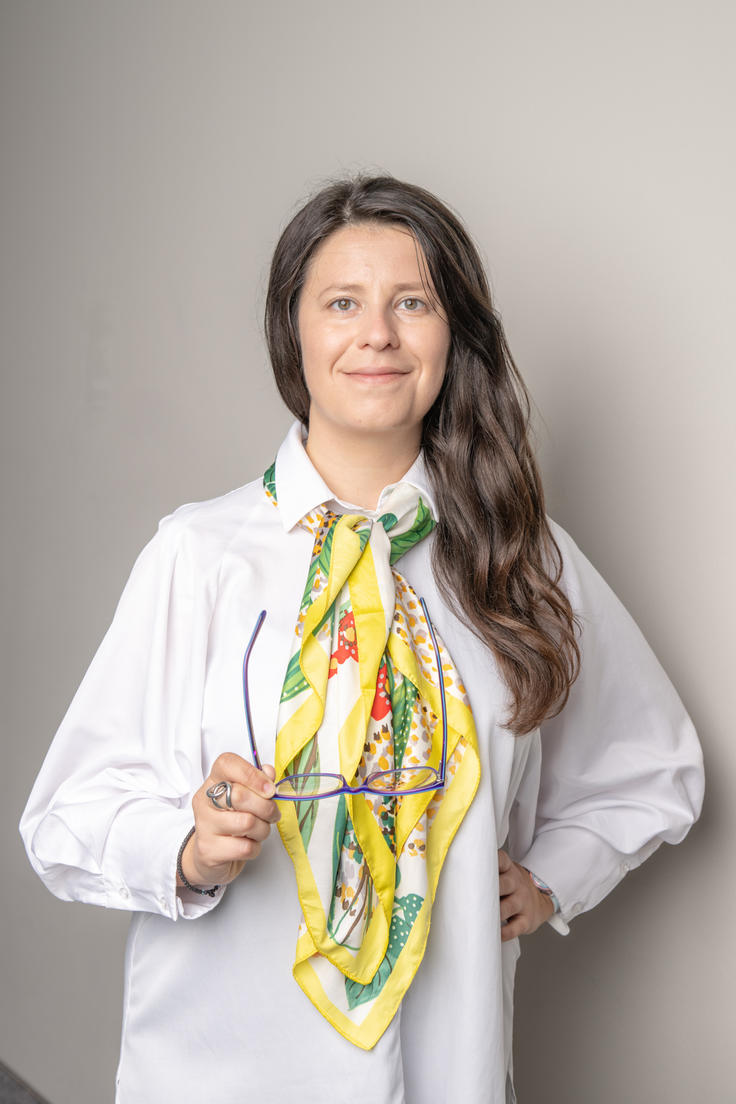
Evgenija Krstevska, mediator and participant of the OSCE Women’s Peace Leadership Programme.
Water conflict prevention and mitigation
I see how women negotiators in this line of work tend to have more empathy towards their opponents, and I do believe that communicating empathically is a critical skill for us. All need to understand the urgency of the issues we are raising at the table. The consequences of climate change will continue to become more visible and we need to be aware that this is also a matter of security.
Everyone has an interest in having stable access to water. I try to always bring in the human dimension because we tend to forget just how much we all share the same basic need of having drinking water.
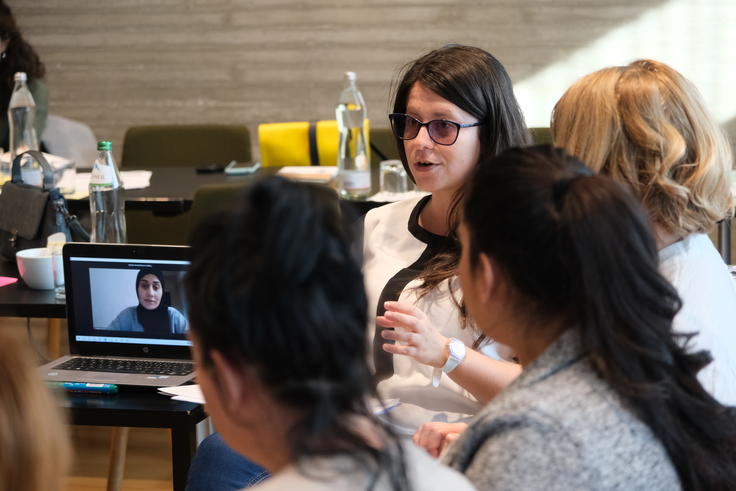
Evgenija Krstevska during the kick-off week of the OSCE Women’s Peace Leadership Programme.
Evgenija is one of the 12 mentees from around the OSCE area and Afghanistan, participating in the OSCE Women’s Peace Leadership Programme 2022-2023, an initiative of the OSCE Secretary General Helga Maria Schmid. The Programme aims to strengthen the ability of women to meaningfully engage and influence peace processes at all levels. It is a part of the OSCE’s flagship WIN for Women and Men project, which covers the Networking platform for Women Leaders including Peacebuilders and Mediators. The WIN project works with OSCE-supported networks and gives rise to new networks, fostering women’s participation and leadership, as well as broader men’s engagement in achieving gender equality.

