

Story
Environment friendly flood management saves lives and protects nature
- Date:
- Source:
- OSCE Secretariat
- Fields of work:
- Environmental activities
- Focus area:
- Disaster risk reduction
The Dniester River delta, located on the territories of both Ukraine and Moldova, is a powerful, complex and fragile ecosystem with invaluable biodiversity. However, it poses a risk of extreme flooding as well as water scarcity for people.
“Following days of extremely heavy rains in July 2008, a severe flood hit the Dniester River area with devastating consequences for thousands of households and infrastructure in both Ukraine and Moldova,” says Viktoriya Boyko, Head of the Hydrological Forecasts Department of the Ukrainian Hydro-meteorological Centre.“It led to human casualties and huge economic damage in both countries. It was devastating.”
Boyko noted that in a changing climate, floods on the Dniester are expected to become more frequent and more intense. “It is critical that in the future, the disastrous consequences of floods be mitigated.”
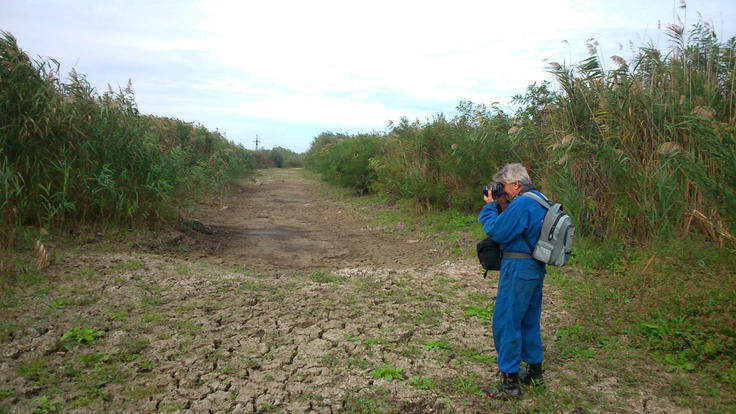
A dry section of the Zastoyniy channel before ecosystem restoration activities were started, September 2015.
Flooding threats
In the past, mainly structural solutions such as the construction of dams were used to mitigate flood risk. Those measures had high financial and environmental costs, and could lead to catastrophe in case of failure.
Today, new ecosystem-based approaches can mitigate floods by spreading water away from populated areas, and by slowing the flood’s volume and speed. “Ecosystem-based approaches to mitigating the risks of floods and water deficits have huge untapped potential for application in the Dniester river basin,” says Alexei Andreev, Head of the BIOTICA Ecological Society. “There is a clear need to learn more about their use,”
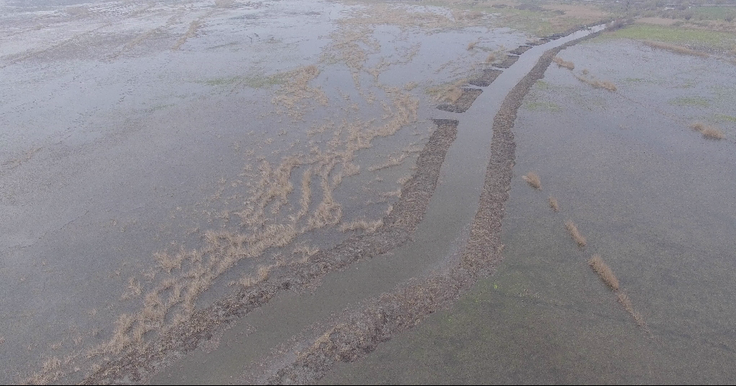
Channel "Zastoyniy" after it was cleaned from silt and vegetation in April 2016. Small islands created along the channel for birds and other animals to use as shelter during flooding.
OSCE engagement
In spring 2016, the Office of the Co-ordinator of OSCE Economic and Environmental Activities (OCEEA) with the support of the OSCE Project Co-ordinator in Ukraine, and funding from the Austrian Development Cooperation, the European Union’s Instrument for Stability and the Government of Switzerland, conducted a pilot restoration project of a small watercourse connecting the Dniester floodplain and the main course of the Dniester delta in the Lower Dniester National Nature Park.
Leonid Kalashnyk, OCEEA Environmental Programme Officer, says that the restoration included clearing silt and vegetation from the Zastoyniy Channel, forming islets for birds and other animals along the channel. “We created a small shallow reservoir, and moved three cables that had crossed the channel and obstructed the water flow.”
Vladimir Gubanov, the park’s deputy science director, says that the restoration has certainly had a positive impact on biodiversity conservation including fish resources, flood mitigation and fire risk reduction. “Results will be further monitored and used for restoration activities in the Dniester delta.”
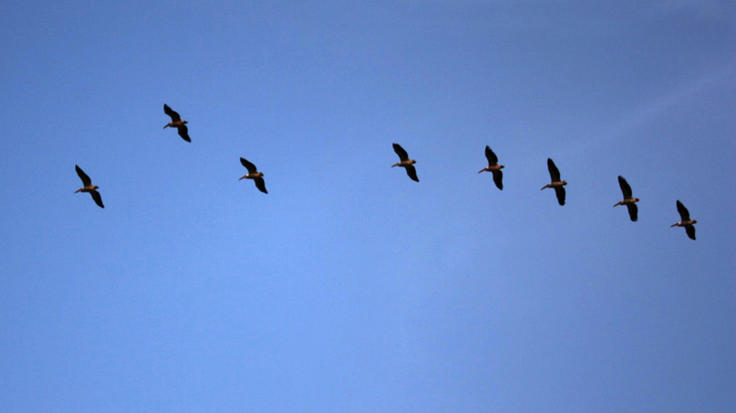
A Great White Pelican flock flying above the Zastoyniy channel.
Co-operation saves lives
Even though these restoration activities are conducted in Ukraine, the effect is also felt across the border in Moldova. “The results of, and lessons learned from these restoration activities have also been shared with experts and relevant authorities in Moldova. This will contribute to the joint efforts undertaken by Moldova and Ukraine, including environmental NGOs from each country, to address the risks of flooding and drought in the Dniester Basin,” says Andreev.
Gubanov says that the improvement of fish nurseries in Ukraine increases fish populations in Moldova and supports animal migration within both countries. “Our experience within the project could be applied in the Moldovan part of the Lower Dniester. We are ready to share the know-how.”
“The project’s long-term effects aim at increasing trans-boundary co-operation by sharing knowledge and expertise among regional and international stakeholders in the Lower Dniester area, notes Kalashnyk. “The pilot project in the Lower Dniester Delta is an important step towards restoring the ecosystem thereby reducing the risk of catastrophic flooding. Prevention is key.”
“During Soviet times we tried to control nature, rather than mitigate the effects of this natural phenomenon on people,” says Gubanov. “Now, we are working on correcting these mistakes and we seem to be on the right path.”
These flood mitigation activities are part of a multi-year effort under the Environment and Security Initiative (ENVSEC), which has also included facilitating the signing of the Dniester Basin bilateral Treaty, developing and endorsing a trans-boundary Strategic Framework of Adaptation to Climate Change in the Dniester River Basin, and implementing a range of monitoring and flood mitigation measures in the basin.
The OSCE, UNDP, UNEP, UNECE AND REC have joined forces in the ENVSEC Initiative to help transform environmental risks into opportunities for co-operation in Central Asia, Eastern Europe, the South Caucasus and South Eastern Europe.

