
Project
Strengthening Biological Safety and Security in Ukraine in line with the Implementation of United Nations Security Council Resolution 1540 (2004) on Non-Proliferation of Weapons of Mass Destruction and Their Means of Delivery
Quick links
- Project period:
- 2020 - 2024
- Implemented by:
- OSCE Project Co-ordinator in Ukraine (closed)
- Fields of work:
- Reform and co-operation in the security sector
Overview
The efforts comprise a package of three inter-related OSCE biosafety and biosecurity projects for Ukraine prepared by the OSCE in cooperation with relevant Ukrainian authorities in support of strengthening biological safety and security: improvement of the legislative framework, establishment of a veterinary surveillance system, and capacity building for life scientists on biosafety and biosecurity.
Background
In 2018, the OSCE Forum for Security Co-operation Support Section (OSCE FSC) of the OSCE Secretariat conducted a comprehensive review of biological safety and security in Ukraine. As a result of the analysis, several gaps were identified in Ukraine’s biological safety and security, in particular:
- the current Ukrainian legislation should be revised and harmonized with international standards and guidelines to introduce safe practices at biotech and research laboratories dealing with human and animal pathogens;
- only two diagnostic tools are available in Ukraine for diagnostics and surveillance of especially dangerous pathogens (EDPs) and related infectious diseases that pose a serious threat to animal wellbeing and food safety in Ukraine. As a result, timely performance of diagnostic procedures, especially during outbreaks, is impossible;
- the existing system of advanced training for some categories of life scientists does not cover all relevant biosafety and biosecurity aspects.
The comprehensive approach to strengthening biological safety and security in Ukraine implemented through this package of projects aims to address the abovementioned issues.
Project 1: Harmonization of Existing Ukrainian Regulations on Biosafety and Biosecurity with International Standards
The objective of this project is to improve Ukraine’s biosafety and biosecurity system through enhancing its national regulatory framework in line with obligations under UNSCR 1540 (2004). The project also contributes to strengthening biological safety and security in Ukraine in line with the EU-Ukraine Association Agreement and complements the government’s efforts outlined in the Strategy for Ensuring Biosafety and Biosecurity.
Expected results of the project:
- Draft law on Biosafety and Biosecurity in Ukraine submitted to the national authorities.
- Draft national regulations on safe and secure management of hazardous biological materials provided to the authorities:
- regulation on the list of priority biological pathogens;
- regulation on registration, storage, delivery, transportation, import and export of strains of microorganisms, toxins and animal and plant poisons;
- order on consolidation of depositories of national collections of pathogenic strains of microorganisms;
- regulation on licensing of laboratories dealing with biological pathogens;
- regulation on oversight of laboratories dealing with biological pathogens.
Project 2: Establishing of the Veterinary Surveillance System Sustainability in Ukraine for EDP-Related Diseases (Especially Dangerous Pathogens)
The objective of this project is to strengthen human and animal health systems in Ukraine by establishing a sustainable laboratory capacity for diagnosis and surveillance of EDP-related diseases, including avian influenza, Newcastle disease, brucellosis, salmonellosis and anthrax. The project will enhance Ukraine’s laboratory capacity and therefore contribute to delivering a sustainable veterinary surveillance system to national authorities.
Expected results of the project:
- Enhanced laboratory capacity to develop polymerase chain reaction (PCR)-based kits for diagnosis and surveillance of infectious diseases;
- Effective national diagnostics and surveillance tools based on real-time PCR instruments (R&D, validation and registration).
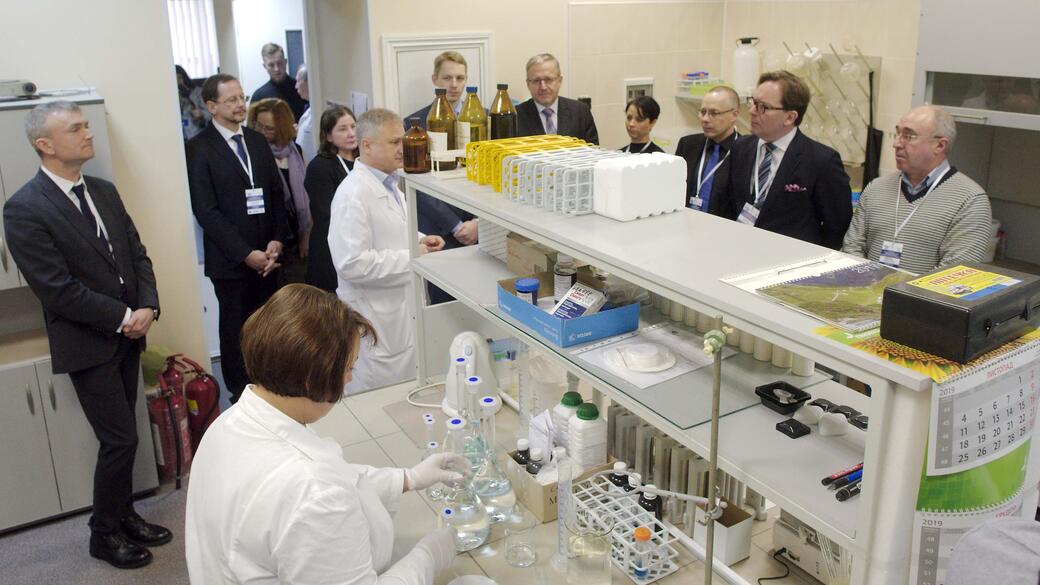
As a result of the project, a specialized laboratory of the National Scientific Centre “Institute of Experimental and Veterinary Medicine”, will be upgraded to comply with safety, security and manufacturing requirements, and seven fully certified and registered diagnostics and surveillance kits will be developed.
Project 3: Awareness raising, education and training for life scientists on biosafety and biosecurity
The objective of this project is to improve biological safety and security and bioethics in Ukraine by training life scientists and ensuring sustainability of the national training system. The project will also foster communication and information exchange between life scientists and raise awareness of biological safety and security threats.
Expected results of the project:
- Strengthened national capacity to train personnel dealing with hazardous biological materials;
- Established multimedia classroom for educational activities and distant learning on biosafety and biosecurity.