Story
OSCE Stories, Real Lives: Ukraine
- Date:
- Source:
- OSCE Project Co-ordinator in Ukraine (closed)
- Fields of work:
- Conflict prevention and resolution, Policing, Environmental activities, Human rights, Elections, Gender equality
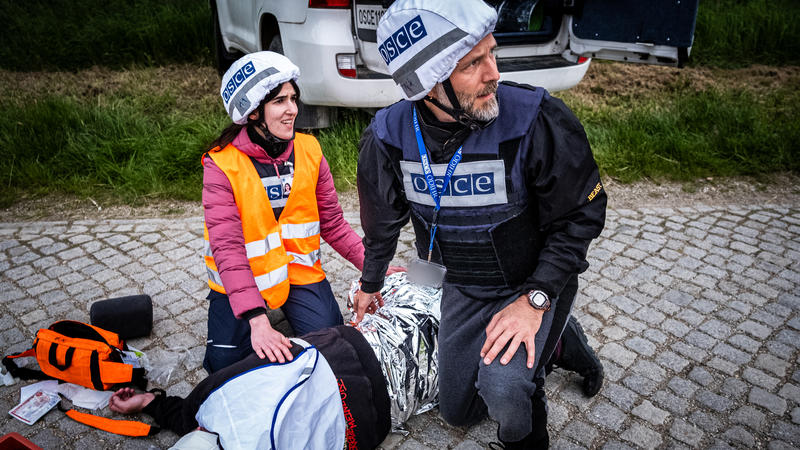
Conflicts in all forms have major impact on civilians. The OSCE, as the largest regional security organization, through its field operations works closely with governments to mitigate conflicts and crises and improve the lives of people from local communities. One such field operation is the Project Co-ordinator in Ukraine.
Environment and Conflict: OSCE assists Ukraine in preparing a response to industrial disasters in conflict-affected areas
A big challenge eastern Ukraine faces is the threat to the environment; often overlooked in conflict-related relief efforts. Heavy industries, including chemical plants in the Donbas region, have the potential to pollute large areas, affecting the lives and health of local residents. The Project Co-ordinator helps to take stock of risk threats in order to provide the necessary information to decision-makers to work on preventing potential disasters.
Domestic violence: OSCE helps Ukraine improve police response to domestic violence
A recent OSCE regional survey confirmed that an armed conflict exacerbates violence against women, as economic and social turmoil, psychological traumas are contributing to spread of physical abuse at home. The OSCE Project Co-ordinator is working in close co-operation with local police in order to make law enforcement responses more citizen-oriented and effective in combating domestic violence and assisting those who suffer. The OSCE helped to develop legal regulations and instructions and provided police officers with educational training, interactive learning models and simulation exercises.
Water and conflict: efforts to contribute to water safety in Ukraine’s conflict-affected areas
One of the strategic resources of national and regional wealth and security is water. Clean water and access to it are an essential civilian right and an element for the well-being of local communities and environment. In conflict-affected areas, water is often a vulnerable resource and the lack of access to clean water is a matter of serious concern. The Project Co-ordinator assisted in establishing a monitoring system, in line with international standards, to improve the ability to detect and respond to possible pollution threats.
Elections for Displaced: conflict-affected people can vote thanks to the OSCE’s assistance
The crisis in Ukraine has displaced almost 1.5 million people. In a democracy, citizen’s right to vote and take part in elections is an essential human right. These days everyone can now take part in local elections whether displaced or not. And all this is due to a unified digital State Voter Register that the OSCE Project Co-ordinator in Ukraine helped to establish.
Explosive threat: OSCE helps Ukraine to establish mine clearance programme
The crisis in and around Ukraine has been ongoing since 2014 and affects millions of people. Mines, unexploded shells and bombs still contaminate many parts of Ukraine. This dangerous legacy remains a threat to the people living there, even in areas where hostilities ended years ago. The Project Co-ordinator helped with developing a mine action programme, with due laws and regulations, enabling co-ordinated efforts of all agencies. In the end, locals receive a certificate verifying that their land has been cleared and is in line with the highest standards.