
-
Our work
-
Fields of work
- Arms control
- Border management
- Combating trafficking in human beings
- Conflict prevention and resolution
- Countering terrorism
- Cyber/ICT Security
- Democratization
- Economic activities
- Education
- Elections
- Environmental activities
- Gender equality
- Good governance
- Human rights
- Media freedom and development
- Migration
- National minority issues
- Policing
- Reform and co-operation in the security sector
- Roma and Sinti
- Rule of law
- Tolerance and non-discrimination
- Youth
- Field operations
- Projects
-
Meetings and conferences
- Summit meetings
- Review Conferences
- Ministerial Council meetings
- Plenary meetings of the Permanent Council
- Plenary Meetings of the Forum for Security Co-operation
- Security Review Conferences
- Annual Implementation Assessment Meetings
- Economic and Environmental Forum
- Economic and Environmental Dimension Implementation Meetings
- Human rights meetings
- Media conferences
- Cyber/ICT security conferences
- Conference of the Alliance against Trafficking in Persons
- Gender equality conferences
- Annual OSCE Mediterranean conferences
- Annual OSCE Asian conferences
- Partnerships
-
Fields of work
-
Countries
- All
-
Participating States
- Albania
- Andorra
- Armenia
- Austria
- Azerbaijan
- Belgium
- Belarus
- Bosnia and Herzegovina
- Bulgaria
- Canada
- Croatia
- Cyprus
- Czechia
- Denmark
- Estonia
- Finland
- France
- Georgia
- Germany
- Greece
- Holy See
- Hungary
- Iceland
- Ireland
- Italy
- Kazakhstan
- Kyrgyzstan
- Latvia
- Liechtenstein
- Lithuania
- Luxembourg
- Malta
- Moldova
- Monaco
- Mongolia
- Montenegro
- The Netherlands
- North Macedonia
- Norway
- Poland
- Portugal
- Romania
- Russian Federation
- San Marino
- Serbia
- Slovakia
- Slovenia
- Spain
- Sweden
- Switzerland – OSCE Chairpersonship 2026
- Tajikistan
- Türkiye
- Turkmenistan
- Ukraine
- United Kingdom
- United States of America
- Uzbekistan
- Asian Partners for Co-operation
- Mediterranean Partners for Co-operation
-
Structures and institutions
- Chairpersonship
-
Secretariat
- Secretary General
- Office of the Secretary General
- Conflict Prevention Centre
- Transnational Threats Department
- Office of the Special Representative and Co-ordinator for Combating Trafficking in Human Beings
- Office of the Co-ordinator of OSCE Economic and Environmental Activities
- Gender Issues Programme
- Opportunities for Youth
- Department of Human Resources
- Department of Management and Finance
- Office of Internal Oversight
- Documentation Centre in Prague
- Institutions
-
Field operations
- Presence in Albania
- Centre in Ashgabat
- Programme Office in Astana
- Programme Office in Bishkek
- Mission to Bosnia and Herzegovina
- Programme Office in Dushanbe
- Mission in Kosovo
- Mission to Moldova
- Mission to Montenegro
- Mission to Serbia
- Mission to Skopje
- Project Co-ordinator in Uzbekistan
- Closed field activities
- Parliamentary Assembly
- Court of Conciliation and Arbitration
- Organizational structure
- About us
Project
Support to environmental rehabilitation with focus on building national humanitarian mine action capacities of Ukraine
Quick links
- Project period:
- 01-Feb-2023 - 31-Dec-2026
- Implemented by:
- OSCE Secretariat Extra-Budgetary Support Programme for Ukraine
- Fields of work:
- Conflict prevention and resolution, Economic activities, Environmental activities
Overview
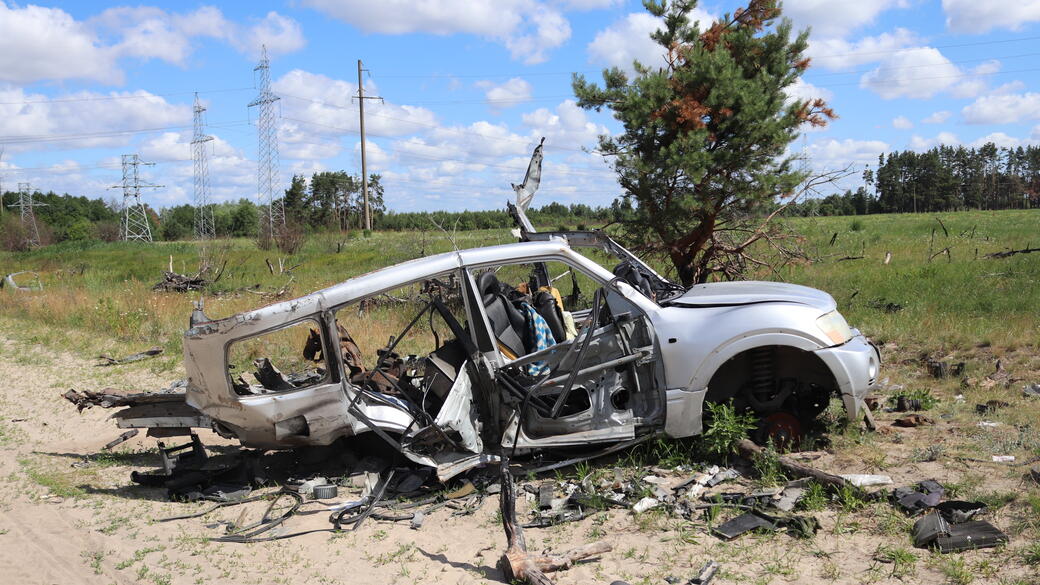
Mines, unexploded bombs, projectiles and rockets, abandoned munitions and other explosive items pose a deadly threat to people, even decades after military actions are over. Contamination by these remnants of war is a key challenge for communities to overcome in order get their lives back to normal. Economic and environmental losses are high, as lands cannot be used for agriculture, and reconstruction efforts are slow and dangerous.
The OSCE has been helping Ukraine deal with mine threats since 2007, when the main problem was caused by the remnants from World Wars I and II, and military accidents related to Soviet legacy. From 2014, military actions in Donbas contaminated vast areas in the east of the country. Improvised Explosive Devices (IED) and antipersonnel mines were reported to be used in populated areas and close to civilian infrastructure. The war from February 2022 worsened the situation drastically, affecting all of Ukraine’s regions.
To contribute to the economic and environmental recovery, with this project the OSCE assists Ukraine’s authorities in building a humanitarian mine action system and helps to strengthen the capacities of relevant agencies to clear contaminated lands.
The project assists the National Mine Action Authority in establishing a functional mine action system, helps build the operational capacities of the Mine Action Centre and Humanitarian Demining Centre to conduct environmentally safe humanitarian demining operations in a systemic way, provides training opportunities and equipment to personnel, and shares expertise and international best practices.
This effort is part of the OSCE Secretariat Extra-Budgetary Support Programme for Ukraine implemented with contributions from the Organization's participating States; see full list of the Programme's donors.
News and updates
Multimedia
Resources
Publications, guides and materials developed under the project


