
-
Our work
-
Fields of work
- Arms control
- Border management
- Combating trafficking in human beings
- Conflict prevention and resolution
- Countering terrorism
- Cyber/ICT Security
- Democratization
- Economic activities
- Education
- Elections
- Environmental activities
- Gender equality
- Good governance
- Human rights
- Media freedom and development
- Migration
- National minority issues
- Policing
- Reform and co-operation in the security sector
- Roma and Sinti
- Rule of law
- Tolerance and non-discrimination
- Youth
- Field operations
- Projects
-
Meetings and conferences
- Summit meetings
- Review Conferences
- Ministerial Council meetings
- Plenary meetings of the Permanent Council
- Plenary Meetings of the Forum for Security Co-operation
- Security Review Conferences
- Annual Implementation Assessment Meetings
- Economic and Environmental Forum
- Economic and Environmental Dimension Implementation Meetings
- Human rights meetings
- Media conferences
- Cyber/ICT security conferences
- Conference of the Alliance against Trafficking in Persons
- Gender equality conferences
- Annual OSCE Mediterranean conferences
- Annual OSCE Asian conferences
- Partnerships
-
Fields of work
-
Countries
- All
-
Participating States
- Albania
- Andorra
- Armenia
- Austria
- Azerbaijan
- Belgium
- Belarus
- Bosnia and Herzegovina
- Bulgaria
- Canada
- Croatia
- Cyprus
- Czechia
- Denmark
- Estonia
- Finland
- France
- Georgia
- Germany
- Greece
- Holy See
- Hungary
- Iceland
- Ireland
- Italy
- Kazakhstan
- Kyrgyzstan
- Latvia
- Liechtenstein
- Lithuania
- Luxembourg
- Malta
- Moldova
- Monaco
- Mongolia
- Montenegro
- The Netherlands
- North Macedonia
- Norway
- Poland
- Portugal
- Romania
- Russian Federation
- San Marino
- Serbia
- Slovakia
- Slovenia
- Spain
- Sweden
- Switzerland – OSCE Chairpersonship 2026
- Tajikistan
- Türkiye
- Turkmenistan
- Ukraine
- United Kingdom
- United States of America
- Uzbekistan
- Asian Partners for Co-operation
- Mediterranean Partners for Co-operation
-
Structures and institutions
- Chairpersonship
-
Secretariat
- Secretary General
- Office of the Secretary General
- Conflict Prevention Centre
- Transnational Threats Department
- Office of the Special Representative and Co-ordinator for Combating Trafficking in Human Beings
- Office of the Co-ordinator of OSCE Economic and Environmental Activities
- Gender Issues Programme
- Opportunities for Youth
- Department of Human Resources
- Department of Management and Finance
- Office of Internal Oversight
- Documentation Centre in Prague
- Institutions
-
Field operations
- Presence in Albania
- Centre in Ashgabat
- Programme Office in Astana
- Programme Office in Bishkek
- Mission to Bosnia and Herzegovina
- Programme Office in Dushanbe
- Mission in Kosovo
- Mission to Moldova
- Mission to Montenegro
- Mission to Serbia
- Mission to Skopje
- Project Co-ordinator in Uzbekistan
- Closed field activities
- Parliamentary Assembly
- Court of Conciliation and Arbitration
- Organizational structure
- About us
Project
Enhancing Ukraine’s chemical emergency response capacity
Quick links
- Project period:
- 1 Nov 2022 - 31 Jan 2026
- Implemented by:
- OSCE Secretariat Extra-Budgetary Support Programme for Ukraine
- Fields of work:
- Environmental activities
Overview
Industrial infrastructure can bear significant risks of chemical emergencies. For Ukraine, the war has caused a rapid escalation of the number and frequency of such incidents, making those risks much higher and less predictable. Shelling or rocket strikes in the vicinity of industrial, nuclear and chemical facilities across the country heightens threats to the lives and health of people, and also exposes the environment to long-term harm. Damage to toxic waste and pesticide storage installations, ammonia pipelines, water purification stations, petrochemical and oil refining facilities is prone to the accidental release of hazardous substances.
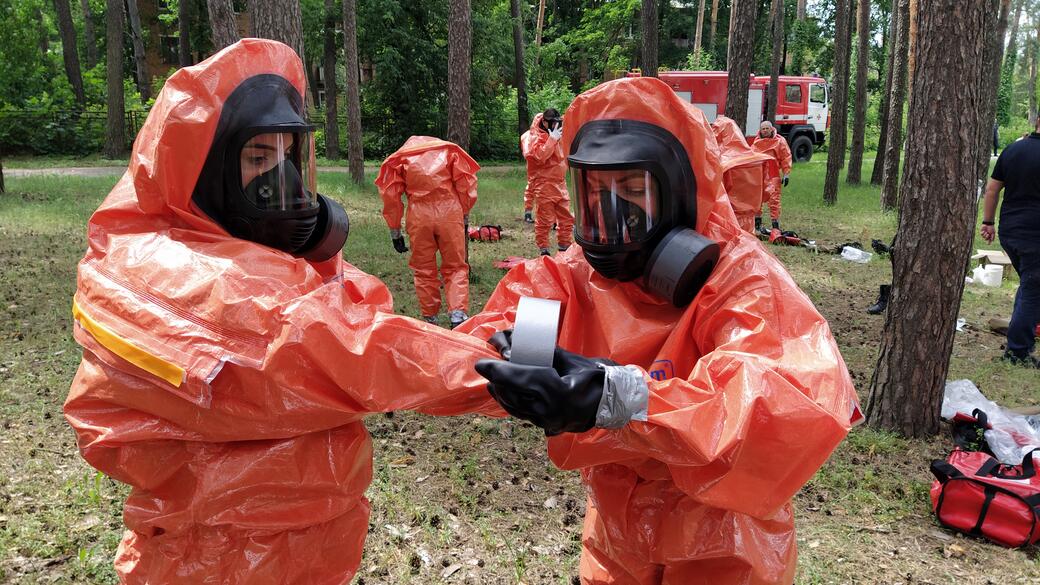
In these conditions, effective, timely, and co-ordinated efforts to mitigate the consequences for civilians and for the environment is extremely important. This project aims to help increase the capacity of Ukrainian first-responders and border guards to deal with emergencies involving hazardous chemicals.
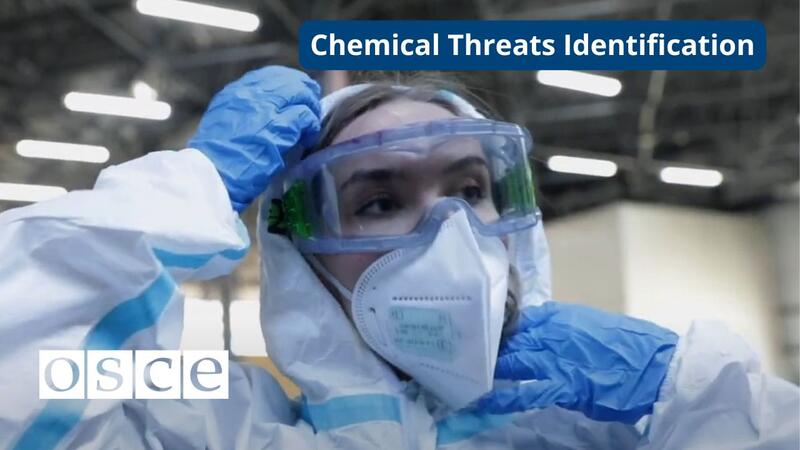
To that end, the OSCE will help the country’s State Emergency Service to improve its chemical sampling procedures for hazards identification and will provide a mobile chemical identification laboratory for rapid on-site analysis and assessment of chemical hazards to obtain critical information for swift decision-making. The assistance will also include the development of software for advanced forecasting of chemical contamination spread to manage rescue operations and efforts to stop the spread of the hazard. Provision of personal protective and decontamination equipment alongside with thematic trainings for State Emergency Service and State Border Guard Service will enhance their technical and practical capacities to operate in the emergency areas. Practical table-top exercises will build skills of civilian defence personnel to effectively protect people and environment from chemical hazards. Development of awareness-raising materials for the civilians on safety procedures will help to reach out to the wider audience of people, especially those living in the potential risk areas.
This effort is part of the OSCE Secretariat Extra-Budgetary Support Programme for Ukraine implemented with contributions from the Organization's participating States; see full list of the Programme's donors.
News and updates
Stories
Exploring the people, challenges and impact of our work
Multimedia
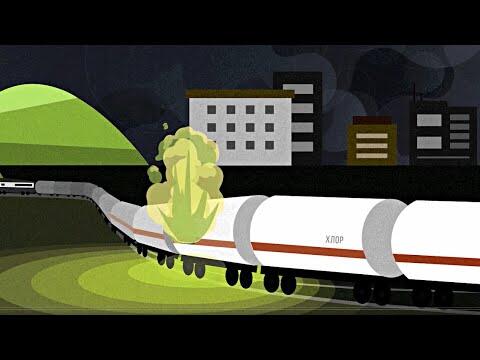
Chemical Emergency – Safety Rules, long version (in Ukrainian)
This video informs people about signs of emergency incidents with possible release of toxic substances and highlights related risks to their health and lives,…
Chemical Emergency – Short Safety Guide (in Ukrainian)
This video provides a short guidance to people to enable them to quickly understand signs of emergency related to toxic chemicals and to take safety…
Chemical Emergency – Safety Rules if You Are at Home
This video provides information on safe behavior for an individual caught in a situation of a chemical emergency while being at home. The OSCE Secretariat…
Chemical Emergency – Safety Rules if You are Outdoors

This video provides information on safe behavior for an individual caught in a situation of a chemical emergency while being outside of any premises, e.g…
Chemical Emergency – Safety Rules if You are Driving
The video provides safety instructions for drivers who may appear in the area, affected by a chemical emergency. The OSCE Secretariat Extra-Budgetary Support…
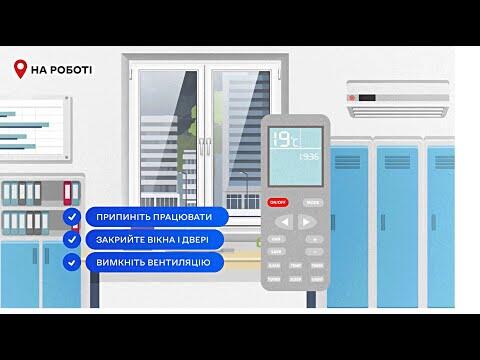
Chemical Emergency – Safety Rules if You are at Work
This video provides information on safe behavior for an occasion when a chemical security incidents happens while a person is at work, in the office or at an…
Resources
Publications, guides and materials developed under the project
OSCE in action
The Organization’s work and teams in related fields
The OSCE’s work is based on a comprehensive security concept, encompassing 23 fields of work. Learn more about the Organization’s activities and teams working in fields relevant to this project.
Gender equality
Gender equality
Equal rights and opportunities for everyone
Human rights
Human rights
Protecting human rights throughout the OSCE region
Environmental activities
Strengthening environmental co-operation
Arms control
Arms control
Reducing the dangers of armed conflict


