-
Our work
-
Fields of work
- Arms control
- Border management
- Combating trafficking in human beings
- Conflict prevention and resolution
- Countering terrorism
- Cyber/ICT Security
- Democratization
- Economic activities
- Education
- Elections
- Environmental activities
- Gender equality
- Good governance
- Human rights
- Media freedom and development
- Migration
- National minority issues
- Policing
- Reform and co-operation in the security sector
- Roma and Sinti
- Rule of law
- Tolerance and non-discrimination
- Youth
- Field operations
- Projects
-
Meetings and conferences
- Summit meetings
- Review Conferences
- Ministerial Council meetings
- Plenary meetings of the Permanent Council
- Plenary Meetings of the Forum for Security Co-operation
- Security Review Conferences
- Annual Implementation Assessment Meetings
- Economic and Environmental Forum
- Economic and Environmental Dimension Implementation Meetings
- Human rights meetings
- Media conferences
- Cyber/ICT security conferences
- Conference of the Alliance against Trafficking in Persons
- Gender equality conferences
- Annual OSCE Mediterranean conferences
- Annual OSCE Asian conferences
- Partnerships
-
Fields of work
-
Countries
- All
-
Participating States
- Albania
- Andorra
- Armenia
- Austria
- Azerbaijan
- Belgium
- Belarus
- Bosnia and Herzegovina
- Bulgaria
- Canada
- Croatia
- Cyprus
- Czechia
- Denmark
- Estonia
- Finland – OSCE Chairpersonship 2025
- France
- Georgia
- Germany
- Greece
- Holy See
- Hungary
- Iceland
- Ireland
- Italy
- Kazakhstan
- Kyrgyzstan
- Latvia
- Liechtenstein
- Lithuania
- Luxembourg
- Malta
- Moldova
- Monaco
- Mongolia
- Montenegro
- The Netherlands
- North Macedonia
- Norway
- Poland
- Portugal
- Romania
- Russian Federation
- San Marino
- Serbia
- Slovakia
- Slovenia
- Spain
- Sweden
- Switzerland
- Tajikistan
- Türkiye
- Turkmenistan
- Ukraine
- United Kingdom
- United States of America
- Uzbekistan
- Asian Partners for Co-operation
- Mediterranean Partners for Co-operation
-
Structures and institutions
- Chairpersonship
-
Secretariat
- Secretary General
- Office of the Secretary General
- Conflict Prevention Centre
- Transnational Threats Department
- Office of the Special Representative and Co-ordinator for Combating Trafficking in Human Beings
- Office of the Co-ordinator of OSCE Economic and Environmental Activities
- Gender Issues Programme
- Opportunities for Youth
- Department of Human Resources
- Department of Management and Finance
- Office of Internal Oversight
- Documentation Centre in Prague
- Institutions
-
Field operations
- Presence in Albania
- Centre in Ashgabat
- Programme Office in Astana
- Programme Office in Bishkek
- Mission to Bosnia and Herzegovina
- Programme Office in Dushanbe
- Mission in Kosovo
- Mission to Moldova
- Mission to Montenegro
- Mission to Serbia
- Mission to Skopje
- Project Co-ordinator in Uzbekistan
- Closed field activities
- Parliamentary Assembly
- Court of Conciliation and Arbitration
- Organizational structure
- About us
Security Days: A Human Rights-Centred Approach to Technology and Security
Conference
- Date:
- Location:
- Hofburg Congress Centre, Vienna
- Organized by:
- OSCE Secretary General
- Series:
- Security Days
- Source:
- OSCE Secretary General, OSCE Secretariat
About
Technology has a growing impact on security, both for better and for worse. It can enable individuals to more effectively exercise their rights and enhance participation in democratic processes as well as help states secure their borders, combat crime, and increase transparency. At the same time, technology is being used to commit crimes, attack infrastructure, spread false information, and foment terrorism.
What does this mean for the security of people, and of states?
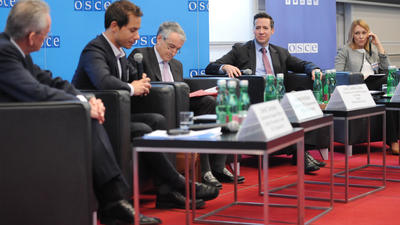
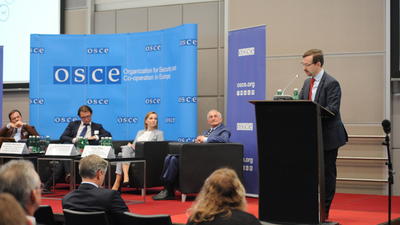
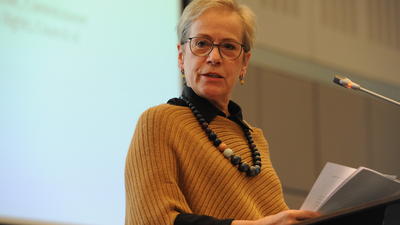
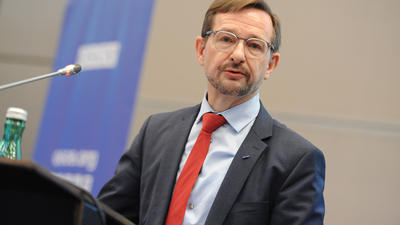
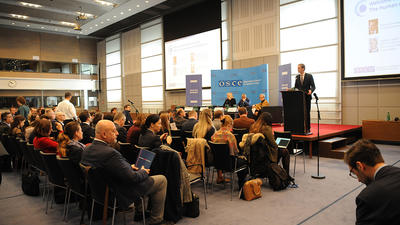
The OSCE will hold a Security Days event on 8 November to look at a human rights-centred approach to technology and security. This event will focus on how new technologies enabled by computerization and digitalization can both enhance and endanger security, and what can be done to strengthen respect for human rights, democracy, transparency and accountability at a time of rapid technological change.
OSCE participating States have long recognized that respect for human rights, fundamental freedoms and the rule of law is intrinsic to security and stability. They have reiterated that protection and promotion of human rights is their “first responsibility” and that “the inherent dignity of the individual is at the core of comprehensive security.”
Participants will identify lessons learned, best practices and recommendations, showcasing good examples of how the OSCE and others use technology to combat threats to security in a human rights-centred way.
OSCE Security Days gather prominent experts from government, think tanks and academic institutions, civil society, youth and media, to engage with each other and with OSCE participating States and Partners for Co-operation in an informal and interactive discussion on twenty-first century security threats and challenges. They are intended as a platform for sharing experiences and good practices, and offer an opportunity to examine emerging trends and priorities for action.
The OSCE Security Day is open to representatives of think tanks and academic institutions, civil society, youth, and media, subject to prior registration and confirmation from the OSCE Secretariat.
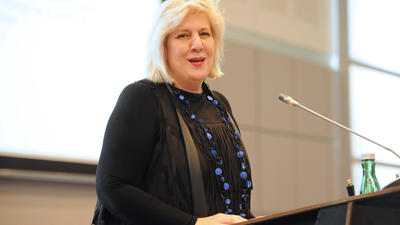
Watch the recordings
OSCE Security Days 2019 - Opening remarks and Session 1
OSCE Security Days 2019 - Session 2
OSCE Security Days 2019 - Session 3
OSCE Security Days 2019 - Session 4 and Closing remarks