

Story
Women’s Peace Leadership Programme: Gulkhanim Mammadova (Azerbaijan) and Milena Reljic (Serbia)
- Date:
- Source:
- OSCE Secretariat
- Fields of work:
- Gender equality
In the male-dominated field of peace and security, Milena Reljic and Gulkhanim Mammadova are both pioneers in their own right.
Milena is a psychologist turned Roma gender expert and an advocate for the Romani community in Serbia. Gulkhanim is a researcher focused on gender and conflict transformation in Baku-based think tank Topchubashov Center. Both have overcome adversity, faced scepticism and fought against outright resistance. Both have succeeded in carving niches of influence and advocacy to become leading examples of the crucial role of women in peace and security in their communities.
Gulkhanim’s Journey
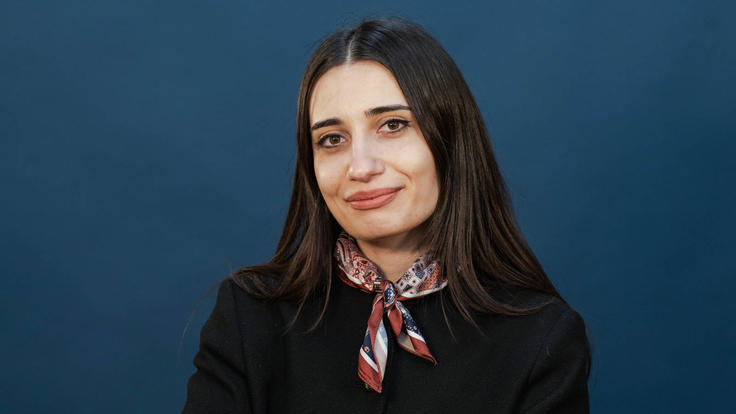
Gulkhanim Mammadova, participant of the OSCE Women’s Peace Leadership Programme
“Growing up in Tovuz, a conflict-affected region of Azerbaijan, war was a constant presence in my life,” says Gulkhanim. “My family often had to flee our home to escape shelling and fighting. These experiences planted a deep hatred for war in me from an early age. I wanted to understand and address the roots of conflict so I pursued a master's degree in Peace and Conflict Studies and focused my master's thesis on women's participation in the Armenia-Azerbaijan conflict. This marked the beginning of my journey into the areas of conflict transformation and peacebuilding.”
Gulkhanim immediately noticed that the arenas of peacebuilding and activism remained predominantly male-dominated and saw a gap and a vital need to advocate for women’s inclusion in the discussions and decision-making process.
"Our presence," she says, "signifies a right to be heard, a right to influence the discourse." As she envisions the future role of women in peace processes, Gulkhanim emphasises the necessity of recognizing and amplifying the invaluable contributions of her female colleagues and counterparts. “Encouraging young women to pursue careers in security, diplomacy, and policy-making is essential," Gulkhanim advocates. “I want to live in a world where peacebuilding efforts are enriched by the diverse experiences and insights of both women and men,” she says.
Gulkhanim is also engaged with networks that underline the power of solidarity and support in a women’s leadership journey.
“I decided to join the Women Peace Leadership Programme to enhance my leadership skills and contribute to building a more peaceful society. I expect to benefit from the rich network of like-minded women, which will not only expand my professional connections but also provide me with valuable insights and support for my future initiatives,” she says.
“The mentorship I received is profound,” Gulkhanim reflects. “My mentor listened and showed me that my opinions mattered and that the perspectives of every team member had value. It increased our ability to have collective input in decision-making.”
Milena’s Advocacy
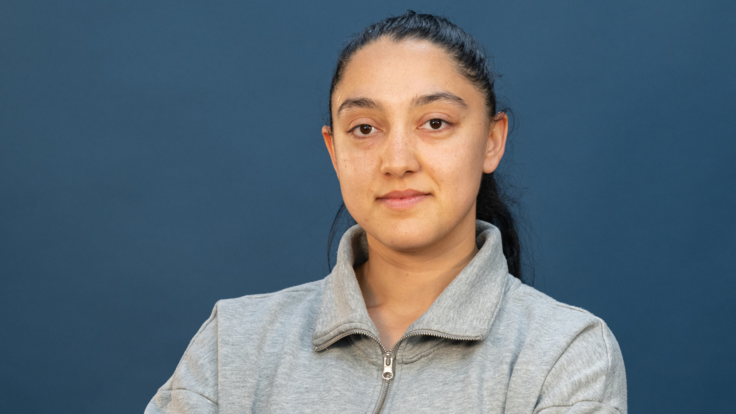
Milena Relji, participant of the OSCE Women’s Peace Leadership Programme
Milena’s background in psychology enabled her to bring a trained eye to her world — a world rife with embedded disparities. "I got into psychology to better understand human behaviour," she reflects, “A big reason was the discrimination I faced based on my nationality since I was old enough to remember.” She found herself confronting discriminatory societal norms that could lead to real neglect of her community, the Romani people.
As the founder of the Homeostasis Group, the organization that strives to improve the lives of young people by tapping into their natural leadership qualities, and a fervent advocate for the Romani community, she is now a leading voice. “To me, leadership is having influence. Influencing people to become the best they can be and be leaders themselves,” Milena says.
Her expertise in psychology equipped her well for the challenges she faces when engaging in gender-based advocacy and peacebuilding. “Being able to compare my experiences with these of other women peacebuilders has been grounding and made me realize where the real priorities lie,” Milena says.
“This is why I joined the Women Peace Leadership Programme driven by the belief that inclusive, diverse leadership is pivotal for sustainable peace. By participating, I aim to amplify my capacity to navigate complex conflicts with empathy, resilience, and innovation. My journey here is not just about personal growth but also about fostering collaborative solutions that transcend boundaries and transform societies,” she emphasizes.
Milena Reljic and Gulkhanim Mammadova are two of the 16 mentees from around the OSCE region and Afghanistan, participating in the OSCE Women’s Peace Leadership Programme 2023-2024, an initiative of the OSCE Secretary General Helga Maria Schmid. The Programme aims to strengthen the ability of women to meaningfully engage and influence peace processes at all levels. It is a part of the OSCE’s flagship project WIN for Women and Men, which covers the Networking platform for Women Leaders including Peacebuilders and Mediators. The WIN project works with OSCE-supported networks and gives rise to new networks, fostering women’s participation and leadership, as well as broader men’s engagement in achieving gender equality.

