

Story
Women’s Peace Leadership Programme: Caroline Brooks, UK
- Date:
- Source:
- OSCE Secretariat
- Fields of work:
- Gender equality
An experienced conflict mediator, Caroline defines her works as building connections between political and diplomatic efforts and the realities on the ground. Currently with Amnesty International, Caroline has worked in many sectors and contexts, but was always strongly focused on fostering inclusive and sustainable peace.
Peace as a process
The last time I travelled to Lebanon, I was working with Syrian partners on building a ‘Citizen’s Charter’ - an inclusive vision for a peaceful and just Syria grounded in the experiences and hopes of young Syrians. It was rather a large and complex process. My role was to provide support with the strategy, advocacy, communication, and connection to other negotiation processes. I also worked on research into inclusive peace processes, linking theory to practice, and doing it in a participatory way.
I derive a great sense of satisfaction from small wins, because I recognize that they add up to bigger achievements. Even if it’s just a really positive meeting, a fruitful conversation, a decision that moves us in the right direction, or a change we make based on a lesson learned or a research finding - those small wins are very encouraging.
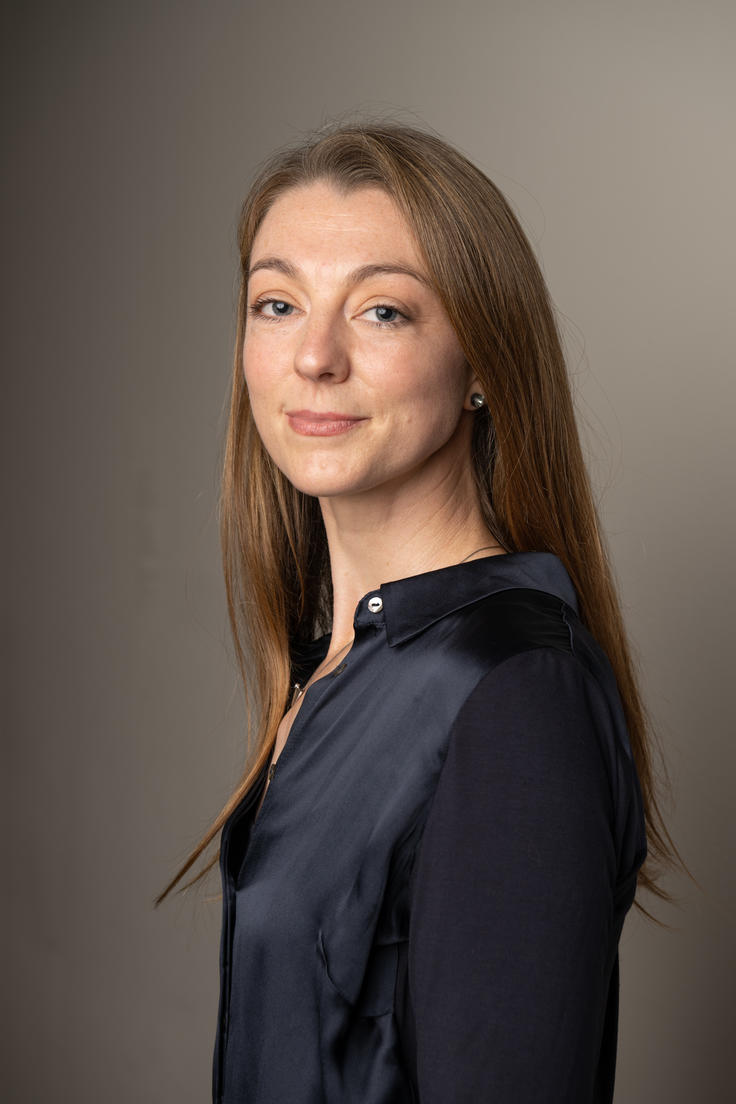
Caroline Brooks, peacebuilder and participant of the OSCE Women’s Peace Leadership Programme.
Learning by doing
I realized quite early on that peacebuilding, mediation, and conflict transformation was the path I wanted to take. Even though it’s extremely hard and sometimes chaotic, I believe if you are doing something you love, it feels right.
Becoming a conflict mediator and a peacebuilder was not a very straightforward path. I did my Master’s in Middle Eastern studies in London, and many people were telling me to get a job in the city, which would have been a logical next step. But I thought, there is no way that I can just study a place from the outside. In order to really understand a situation and context, you have to live there and engage with it, so I moved to Jordan and started working on the humanitarian response to the war in Iraq.
Then I pursued a job in risk consulting and worked in Iraq and Afghanistan. That gave me completely different skills and perspectives. After about five years I decided to move into an area where I could be more directly connected to peacebuilding and conflict transformation. International Alert – a global peacebuilding charity - was looking for someone who could manage a very complex project in a high-risk environment, so I joined them to work as the Syria programme manager, then later as the Ukraine programme manager.
Solutions developed by community
I spent 7 years working with Syrian civil society, peacebuilding activists, diplomats, political negotiators and other NGOs, donors, and communities directly affected by violent conflicts. I also worked a lot with children affected by the conflict in Syria, including with refugees in Lebanon and Turkey. Most of this work happens through in-person connection. I find joy and inspiration in working on issues together, and finding solutions together.
A lot of my experience was gained through learning by doing, and I am a little embarrassed to say that I didn’t really have peacebuilding training before I joined Alert. My training was really ‘on the job’ and by following the example set by Syrian and Ukrainian peacebuilding activists.
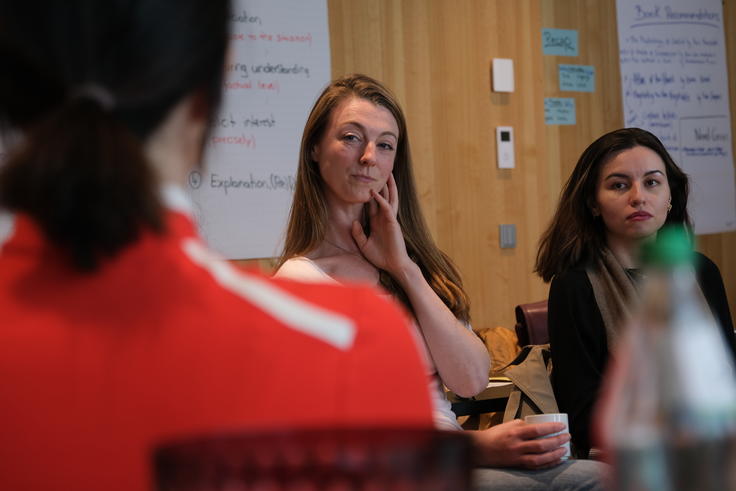
Caroline Brooks during the kick-off week of the OSCE Women’s Peace Leadership Programme.
Building everlasting connections
Within the WPLP I have learned so much from my fellow participants. I had a limited understanding of some of the contexts that the other women in the WPLP come from, and they have taught me a lot about what works for them, what doesn’t, what are the gaps, and what are their struggles. Beyond that, they are sources of inspiration, solidarity and resilience – a real sisterhood.
Being part of WPLP is not just an opportunity for skills development, but also for relationship building and growth through community. What is unique about this programme is not only its duration, which allows us to develop and sustain these incredible connections over time, but the truly supportive environment that we created together – something which is fundamental to being the leaders we want to be.
Caroline is one of the 12 mentees from around the OSCE area and Afghanistan, participating in the OSCE Women’s Peace Leadership Programme 2022-2023, an initiative of the OSCE Secretary General Helga Maria Schmid. The Programme aims to strengthen the ability of women to meaningfully engage and influence peace processes at all levels. It is a part of the OSCE’s flagship project WIN for Women and Men, which covers the Networking platform for Women Leaders including Peacebuilders and Mediators. The WIN project works with OSCE-supported networks and gives rise to new networks, fostering women’s participation and leadership, as well as broader men’s engagement in achieving gender equality.

