

Story
North Macedonia: Building bridges to empower youth against violent extremism
- Date:
- Source:
- OSCE Secretariat
- Fields of work:
- Countering terrorism, Youth
As part of the whole-of-society approach to preventing and countering violent extremism and radicalization that lead to terrorism (P/C VERLT), civil society play a critical role. In view of this, as of 2016, the OSCE has developed the multiannual flagship initiative called Leaders Against Intolerance and Violent Extremism (LIVE). This project, in co-operation with OSCE field operations and respective host countries, aims to jointly build grassroots resilience against violent extremism by promoting context-specific efforts at community level.
Civil society working to prevent violent extremism
In North Macedonia, NGOs are bringing young people together to strengthen their resilience to violent extremism, which often affects young people disproportionately.
As noted by the United Nations, harmful stereotypes that associate young people with violence, both as perpetrators and victims can result in a failure to recognize the agency and unique potential of young people in addressing violent extremism.
In North Macedonia, civil society organizations like the Centre for Intercultural Dialogue (CID), the Centre for Balkan Co-operation Loja and the Youth Community Centre are working to ensure that the creative power of young people is harnessed, and they can be part of meaningful initiatives in addressing violent extremism.
“When discussing our work, rather than speaking about prevention or radicalization, we speak about human rights. We learn about equality, about youth participation,” says Dragana Jovanovska, Executive Director of the Kumanovo-based CID and a facilitator for the OSCE Leaders against Intolerance and Violent Extremism (LIVE) initiative.
The Youth and Community Centre (YCC) from Gostivar brings young people together offering them non-formal education to enhance their leadership skills.
“It is especially important to bring young people belonging to different ethnic groups together. We believe that it is key to unite them so they can build a future, because the future is in the youth,” says Renata Nackovska, co-ordinator at the YCC.
“What I always try to build into my work is that love is stronger than hate,” says Nackovska’s colleague, Sefer Selimi.
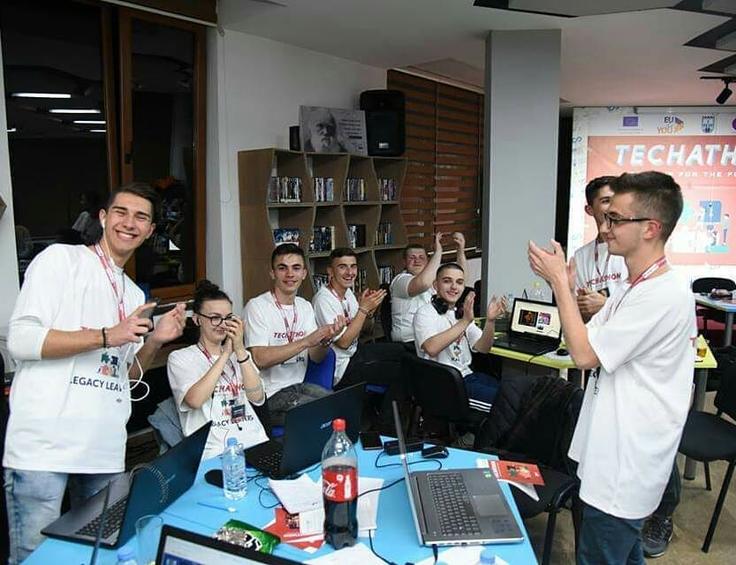
Young people at the premises of the Youth and Community Centre (YCC) from Gostivar
Ways of engaging youth
Naser Veliu, who participates in different activities offered by the YCC, particularly enjoys the leadership course.
“It provides us with valuable skills for our future,” says Naser, who is surrounded by books in Albanian, Macedonian and English at the YCC’s communal library. “My key contribution is that I am helping my city, Gostivar and the country of North Macedonia to move forward.”
Building the capacities of youth in addressing the challenges posed by violent extremism is one of the priorities of the OSCE Mission to Skopje.
As part of the LIVE initiative activities conducted by the Mission and the OSCE Secretariat in North Macedonia from February to June 2020, the Mission provided 15 young leaders with knowledge to engage in preventing violent extremism and intolerance within their communities, in line with the do no harm principle. The training provides them with the necessary technical skills in key areas such as critical thinking, policy influence, media literacy, strategic communications, project design and evaluation, and security awareness. The entire training programme is rooted in the principle of do no harm, which is based on the understanding that no programming is neutral — interventions can support peace but they can also directly or indirectly cause harm and support conflict and violence.
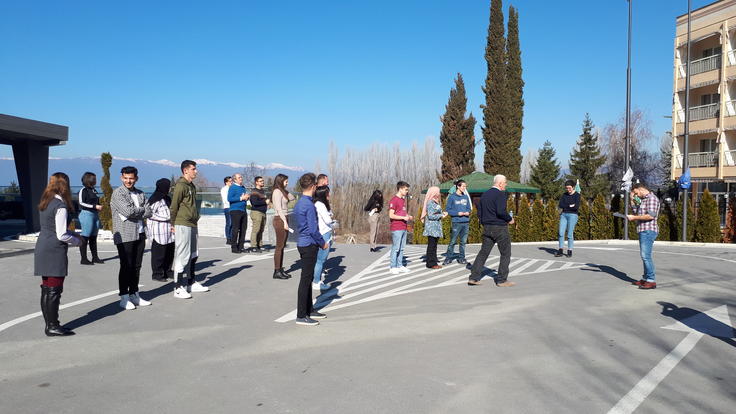
Leaders against Intolerance and Violent Extremism Training, Ohrid, North Macedonia, February 2020.
"This initiative is one of the rare projects that offers lifetime learning,” said Risto Saveski, a participant of the LIVE initiative. “Perhaps one cannot change the water current, but drop-by-drop one can make a change. LIVE focuses on those local initiatives, which together is bound to bring about a new wave. By putting youth leaders at the helm against radicalization and extremism in our society, a domino effect can be initiated, that will one day break the chain in the ecosystems of violence and extremism."
Watch the video “Voices of civil society building bridges” and learn more about the young leaders’ initiatives in North Macedonia.

