

Education
Access to education is a human right. Access to a high standard of education, free from racism or discrimination, is also an important tool to prevent conflict or to rehabilitate societies that have experienced conflict. The OSCE is actively engaged in strengthening and improving educational standards in its participating States.

Quick links
Our challenge
Many factors can affect security and stability, often across borders, population segments or the OSCE’s three dimensions.
Eroding standards of education in a state are often a reflection of poor economic and social conditions, and sometimes of unrepresentative and rigid political structures or outright discrimination. All these factors directly undermine stability and affect the security and prosperity of a society. High standards of education, on the other hand, have been recognized by the OSCE as leading to higher standards of living and more tolerant, democratic and equal societies that respect human rights.
[…] the development of relations of an international character in the fields of education and science contributes to a better mutual understanding and is to the advantage of all peoples as well as to the benefit of future generations.
Our action
Building on our comprehensive and co-operative approach to security, we work on strategies to tackle the issue head-on.
Given the importance of education as an effective conflict prevention tool, we have emphasized from early on the importance of education systems that guarantee universal access to a high standard of education. Our activities in this field focus on national minority education policies; inter-ethnic understanding and interaction in education; respect for diversity, tolerance, equality and human rights in schools; and the need to educate young people without discrimination.
Our teams
Our institutions, field operations and offices bring to the task expert skills and knowledge to develop tailor-made solutions for each challenge.
Our institutions and offices
Two of our institutions—the High Commissioner on National Minorities and the Office for Democratic Institutions and Human Rights—are spearheading the OSCE’s efforts in the field of education. While the former focuses on engaging participating States in formulating national minority education policies, the latter works on initiatives to promote respect for diversity and mutual understanding in schools and to train educators on human rights.


Our operations on the ground
Several field operations in South-Eastern Europe assist their host countries in the area of education. This includes, among other issues, support for education reform, including legal education; improving school management; developing mediation in schools; human rights and environmental education; and advice and assistance for groups involved in education, from schools to teacher training faculties.
In the Central Asia region, the OSCE Academy in Bishkek is since 2002 the Organization’s flagship education initiative to promote the Organization’s commitments to young people in all five Central Asian states and Afghanistan. The OSCE Academy aims at fostering regional co-operation, conflict prevention and good governance in Central Asia through post-graduate education, professional trainings and intellectual exchange.
Mission to Bosnia and Herzegovina
Mission to Bosnia and Herzegovina
Established on 8 December 1995, the Mission works on human rights, education, the rule of law, gender equality, governance and security co-operation.
Mission to Serbia
Mission to Serbia
The Mission, set up on 11 January 2001, is based in Belgrade and assists Serbia in building accountable democratic institutions.
Mission to Skopje
Mission to Skopje
Established on 18 September 1992, the Mission’s key priorities are constructive inter-ethnic relations and the 2001 Ohrid Framework Agreement.
Projects
Initiatives funded by individual states and organizations

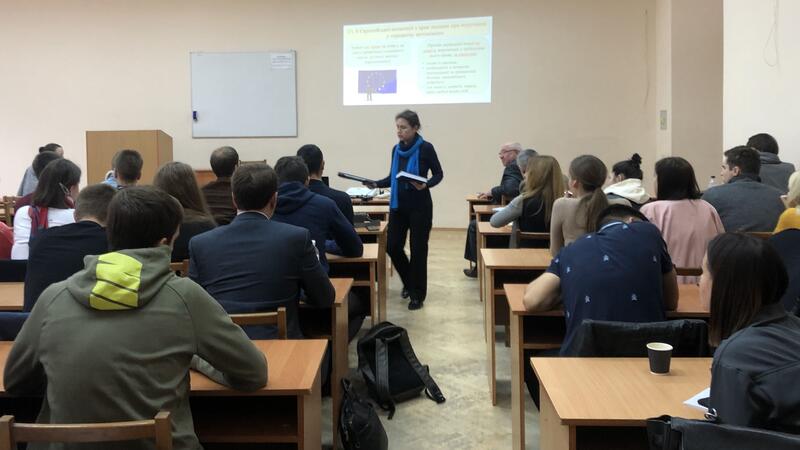
Events
Upcoming conferences, meetings and training events

Studies and reports
Reports, studies and analyses for policymakers, researchers and all those interested in this field of our work


Manuals and guides
Practice-oriented manuals, guides, handbooks and recommendations for policymakers and practitioners working in this field


OSCE stories
Read up on the OSCE, our people on the ground and our work

Story
A story of an extraordinary woman who successfully runs her business in Kadamjai, Batken province
24 January 2023
OSCE Programme Office in Bishkek

Story
Improving the quality and accessibility of education in the Issyk-Kul province of Kyrgyzstan
30 November 2022
OSCE Programme Office in Bishkek