Story
Putting Europe Back Together
- Date:
- Source:
- OSCE Chairpersonship
- Fields of work:
- Conflict prevention and resolution
We are nearing the end of one of the most volatile years of this young century. Crises in Iraq, Syria and Ukraine, the spread of Ebola, and instability in the South China Sea have created convulsions in the international system.
At the same time, important anniversaries have reminded us of the dangers of drifting into war like in 1914, and the possibilities for peaceful change brought about by the revolutions of 1989.
What will future historians say of the leaders of today? Were we able to pull Europe back from the brink of a major crisis? Or did we fail to live up to the ambition of our forefathers who, when drafting the Charter of the United Nations seventy years ago, were determined to save succeeding generations from the scourge of war?
The events of the past year have unexpectedly shown us that many of the assumptions that we had held since the end of the Cold War can no longer be taken for granted. The European security architecture is cracking.
On 4 and 5 December, in my capacity as Chairman-in-Office of the Organization for Security and Co-operation in Europe (OSCE), I will host foreign ministers from more than 50 countries across Europe and North America in Basle, Switzerland, to see what steps can be taken to de-escalate tensions in relation to the conflict in and around Ukraine.
Failure to resolve the crisis in Ukraine is not only a risk to European security, it is a major handicap to finding co-operative solutions to common problems.
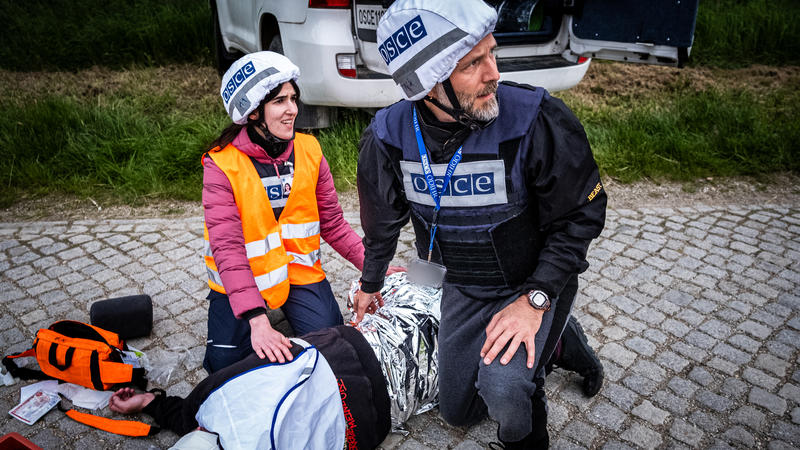
Concretely, this requires all sides to do everything in their power to consolidate the ceasefire in eastern Ukraine, fully implement the commitments made in the framework of the Minsk protocol and memorandum, and abstain from acts that could exacerbate the fragile situation. It also requires continued diplomatic efforts to ease tensions through dialogue. And it means giving the OSCE Special Monitoring Mission the tools to do its job on the ground.
We also need to ask some bigger questions. Are OSCE states still committed to the common principles and norms that have been agreed since the Helsinki Final Act of 1975? How can we rebuild trust, particularly between Russia and the West? Can we still think of constructing a common European home, as dreamed of at the end of the Cold War, achieving the vision of a European security community that spans from Vancouver to Vladivostok?
We need to make the right choices, and soon. The conflict in Ukraine has caused more than four thousand deaths, it has led to the displacement of almost 900,000 people, it is hampering the growth of Ukraine, and affecting stability and economic development across Europe.
We need to talk. And the OSCE, with its inclusive membership, is the place to do it.
Furthermore, rather than achieving a Europe whole and free, there is a dangerous increase in military activity and belligerent rhetoric, and the drawing of new dividing lines. History has shown us that continuing in this direction will lead to a dead end.
These destabilizing events come at a time when multilateral co-operation is needed more than ever. States must work together to cope with threats like crises in the Middle East, the spread of diseases, forced displacement, the return of foreign fighters, nuclear non-proliferation, cyber security, and disaster risk reduction. Failure to resolve the crisis in Ukraine is not only a risk to European security, it is a major handicap to finding co-operative solutions to common problems.
Therefore we need to talk. And the OSCE, with its inclusive membership, is the place to do it.
Next year, there will be major events to mark the seventieth anniversary of the end of the Second World War and the establishment of the United Nations, as well as forty years since the Helsinki Final Act. Inspired by those peacemakers, let us work to put Europe back together. We owe it to the people of Ukraine, the people of all Europe and the generations that follow us. It is our responsibility as political leaders to make sure that Europe will never be divided again.
The author is Didier Burkhalter, the President and Foreign Minister of Switzerland and the OSCE Chairperson-in-Office.
Published in New Europe, on the occasion of OSCE Ministerial Council in Basel, 4-5 December 2014