Story
Transdniestrian Settlement: building trust, finding solutions
- Date:
- Source:
- OSCE Chairpersonship
- Fields of work:
- Conflict prevention and resolution
The OSCE works to prevent conflicts from arising and to facilitate long-lasting and comprehensive political settlements for existing ones. The OSCE works together with the sides in the Transdniestrian conflict in Eastern Europe, engaging them and international actors within the 5+2 format to find a solution.
Latest News
Confidence building between Transdniestria and Moldova discussed at OSCE conference in Germany
FREISING, Germany, 11 June 2014 – A two-day conference on strengthening confidence-building measures between Transdniestria and Moldova concluded today in Freising in southern Germany. The conference is organized by the OSCE Mission to Moldova with the support of the German government. Read more >>
PHOTO: .@SwissOSCE2014 Special Rep Bogojević chairs 5+2 Transdniestria settlement talks, which opened today in Vienna pic.twitter.com/FpG4lFwaEN
— OSCE (@OSCE) June 5, 2014
Background
After the collapse of the Soviet Union, an armed conflict broke out in 1992 between the Transdniestrian authorities and the newly established central government in Chisinau along the Dniester/Nistru river. Violent clashes resulted in several hundred casualties and more than 100,000 displaced persons. A ceasefire was agreed in July 1992, and the parties committed themselves to negotiate a settlement to the conflict.
Transdniestrian settlement talks
The goal of the talks is a final, comprehensive and durable settlement of the Transdniestrian conflict, finding a special status for Transdniestria and respecting the territorial integrity and sovereignty of the Republic of Moldova.
Since 2005, the talks have been held in the 5+2 format that includes the sides (Transdniestria and Moldova), the OSCE, Russia, Ukraine as mediators, and the European Union and the United States as observers. The OSCE chairs the negotiation process which was interrupted for almost six years, resuming in 2011. Since then, the 5+2 participants have been meeting periodically to discuss issues affecting the lives of the people on both banks of the Dniester/Nistru river, such as freedom of movement, education, telecommunications, economy, transport, environment and matters related to the security zone.
One of the positive achievements of the 5+2 talks is the resumption of railway traffic across Transdniestria on April 2012 after a six-year disruption. The agreement facilitates the transportation of goods and passengers between Moldova, Ukraine and Russia.
Press releases and statements related to the 5+2 negotiations on Transdniestria
Listen to an interview with the Head of OSCE Mission to Moldova about the conflict resolution
Confidence- and security-building to facilitate a Transdniestrian settlement
The 5+2 is the highest political forum, but certainly not the only one.
The OSCE Mission to Moldova works with the two sides to build confidence between the people that live on both sides of the Dniester/Nistru, facilitates informal meetings between the Chief Negotiators of the two sides and the activity of the expert working groups.
The expert working groups were created in 2008 to address practical issues related to people’s daily lives on both banks of the Dniester/Nistru River. There are eleven working groups:
- Law Enforcement Co-operation,
- Agriculture and Ecology,
- Railways,
- Economy and Trade,
- Healthcare,
- Humanitarian Aid and Social Issues,
- Civil Status,
- Education, Science and Youth,
- Transportation and Road Infrastructure,
- Customs Clearance and
- Telecommunications and Postal Service.
Every year, the OSCE Mission to Moldova with the support from the German Government organizes a Conference on Confidence -Building Measures in the Trandniestrian Settlement Process. This year, the conference will take place in Freiburg 10-12 June. They will discuss issues related to economy, trade and infrastructure; freedom of movement; ecology and environment; and education.
READ about previous conferences in Lanshut and Rottach-Egern.
Confidence and trust between people can also be built by non-military means:
December 2013: 'Winnie-the-Pooh' play staged with OSCE support for children from both banks of Dniester/Nistru >>
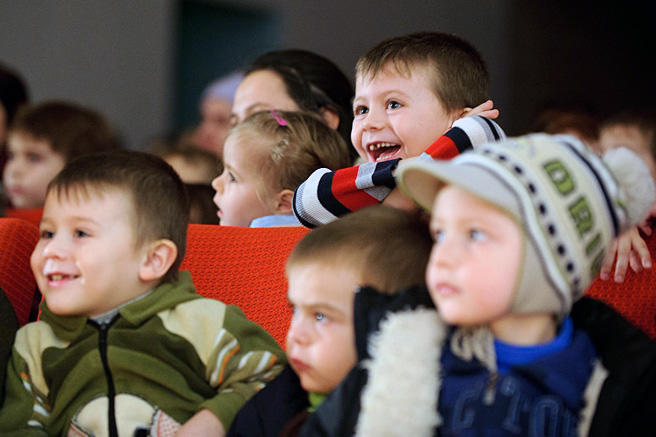
“Corjova has an uncomfortable existence squeezed in between Tiraspol’s and Chisinau’s influence, which sometimes has negative effects on everyday life here. We wanted to do something for the children, something in order to put a smile of their faces,” says Kenneth Pickles, the OSCE official responsible for the project.
September 2013: OSCE supports jazz workshop and concerts in Tiraspol and Comrat >>
Summer 2013: Young women from both sides of Dniester/Nistru river learn about leadership and business at OSCE summer school >>
[node id="104061" preset="medium" align="left" description="Participants at a summer school on leadership attending a workshop on career opportunities and challenges for young women, Vadul lui Voda, 30 July 2013. (OSCE/Igor Schimbator)"]
Summer 2012: Two concerts supported by the OSCE Mission to Moldova have given the communities that sit astride the Dniestr/Nistru River the opportunity to interact and improve communications: