
Meetings and events
Throughout the year, the OSCE decision-making bodies convene in Vienna to set priorities, carry out political consultations, and govern the day-to-day work of the organization. Meetings and conferences are held across the OSCE region, organized by the OSCE field operations, institutions and Secretariat on topics in the politico-military, economic and environmental, and human dimensions.
These events bring together government representatives, international organizations, NGOs and UN agencies, academics and the media to share good practices, lessons learned, new solutions and innovative approaches to address security and co-operation.
Summits
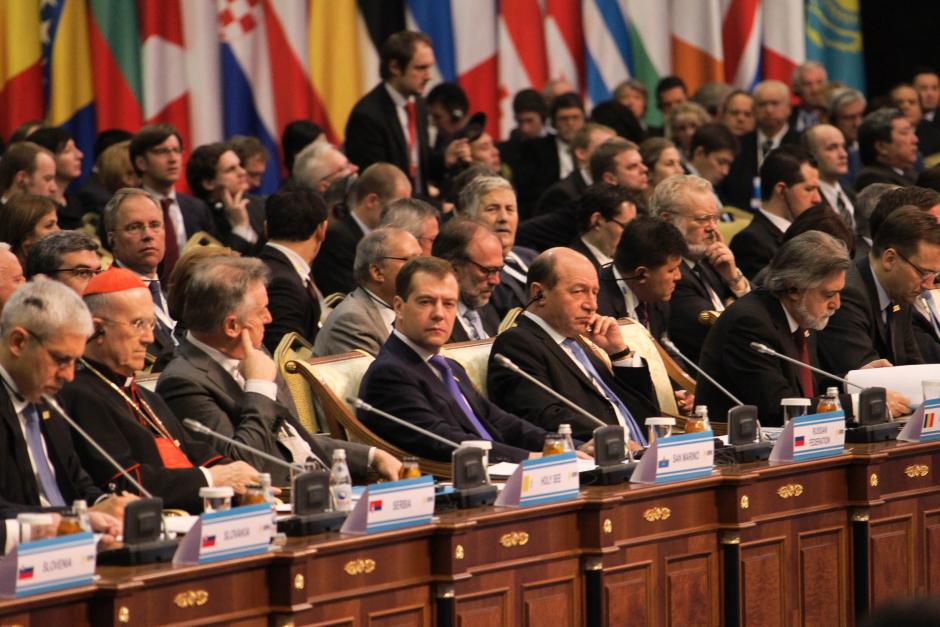
Heads of State and Government at the OSCE Summit in Astana, 1 December 2010. (OSCE/Vladimir Trofimchuk)
An OSCE Summit is the Organization’s highest decision-making body, in which Heads of State or Government of the OSCE participating States set the priorities at the highest political level and provide orientation for several years.
Ministerial Councils
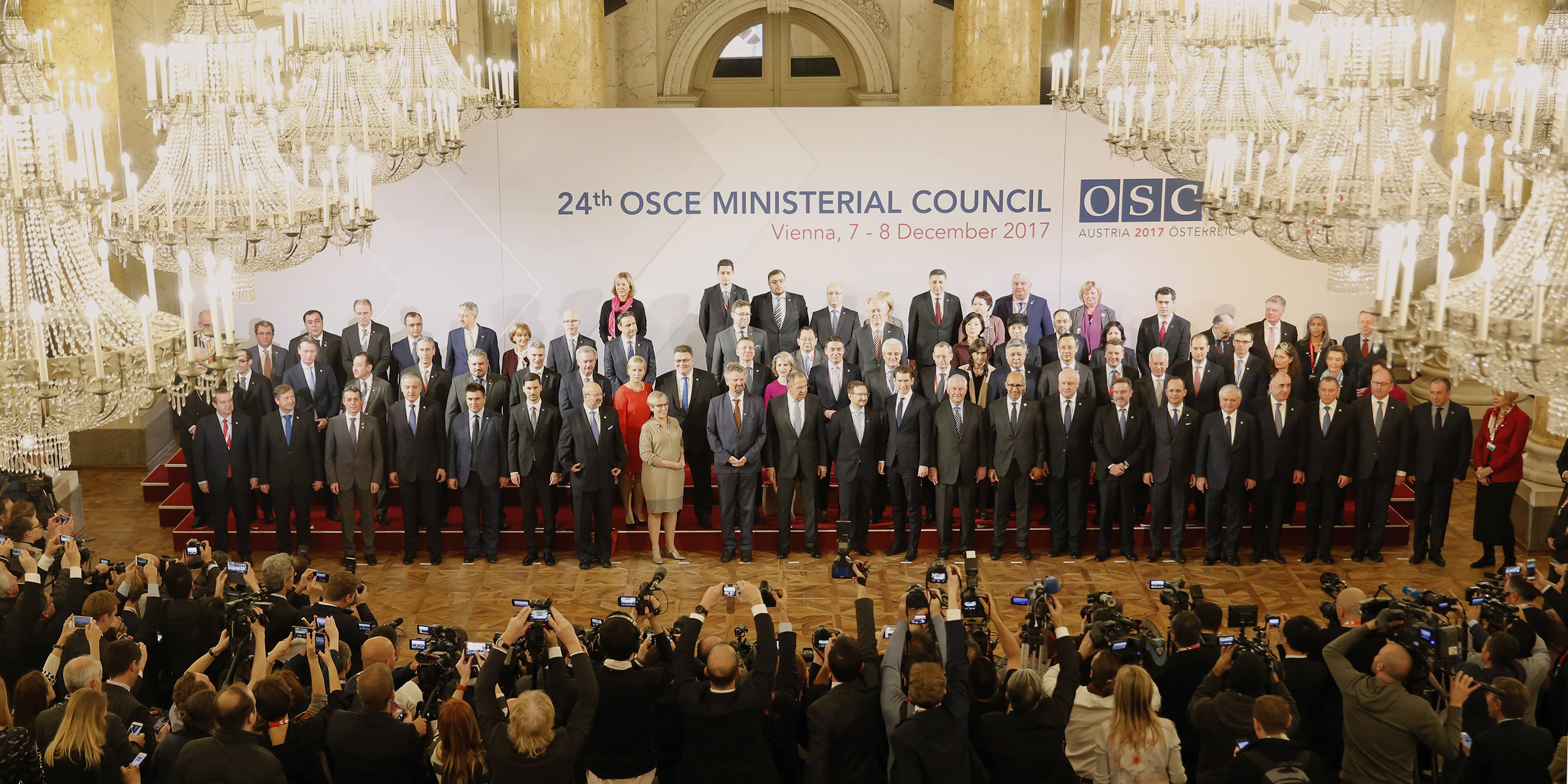
OSCE Foreign Ministers and Heads of Delegations pose for a family photo at the 24th Ministerial Council in Vienna, 7 December 2017.
The Ministerial Council is composed of the Ministers for Foreign Affairs of the OSCE participating States and is the central decision-making and governing body of the Organization between Summits. Ministerial Councils meet, as a rule, once a year in the country holding the Chairmanship and when no Summit takes place.
Permanent Council
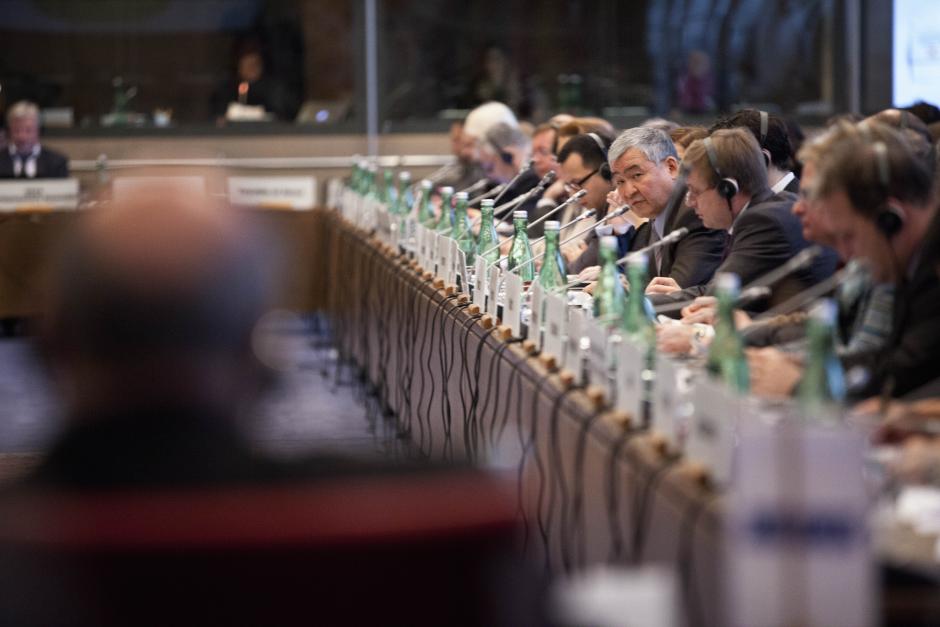
A Permanent Council meeting held in Vienna, 22 November 2012. (OSCE/Curtis Budden)
The Permanent Council meetings take place once a week in Vienna. The Permanent Council is the principal decision-making body for regular political consultations and for governing the day-to-day operational work of the OSCE between the meetings of the Ministerial Council.
Forum for Security Co-operation
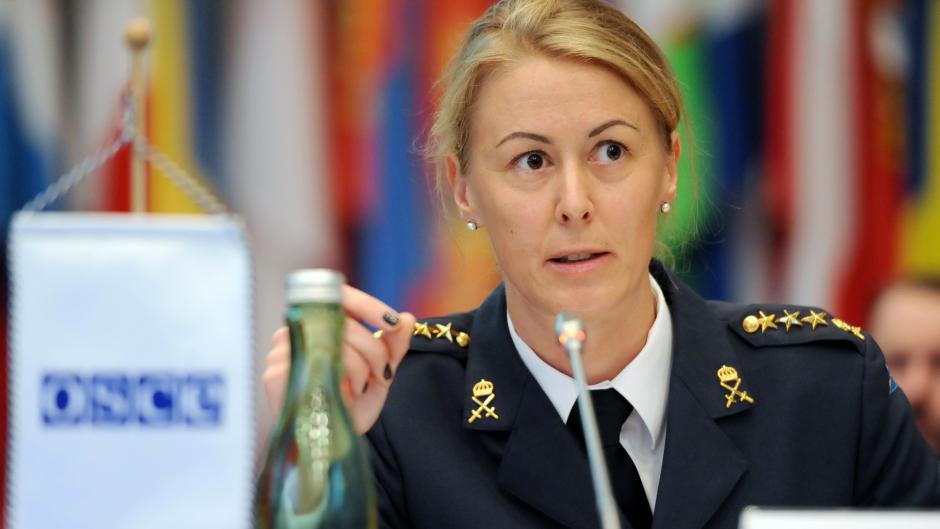
Captain Anna Björsson, gender advisor with the Swedish Armed Forces Headquarters, speaking at a joint meeting of the Forum for Security Co-operation and the Permanent Council, Vienna, 7 October 2015. (OSCE/Micky Kroell)
Meeting weekly in Vienna, the Forum for Security Co-operation is one of the OSCE’s two main regular decision-making bodies, along with the Permanent Council. The FSC focuses on the politico-military dimension of security, including confidence- and security-building measures, and provides a unique platform for the 57 OSCE participating States to discuss topical security challenges on an equal footing.
Human Dimension Implementation Meeting
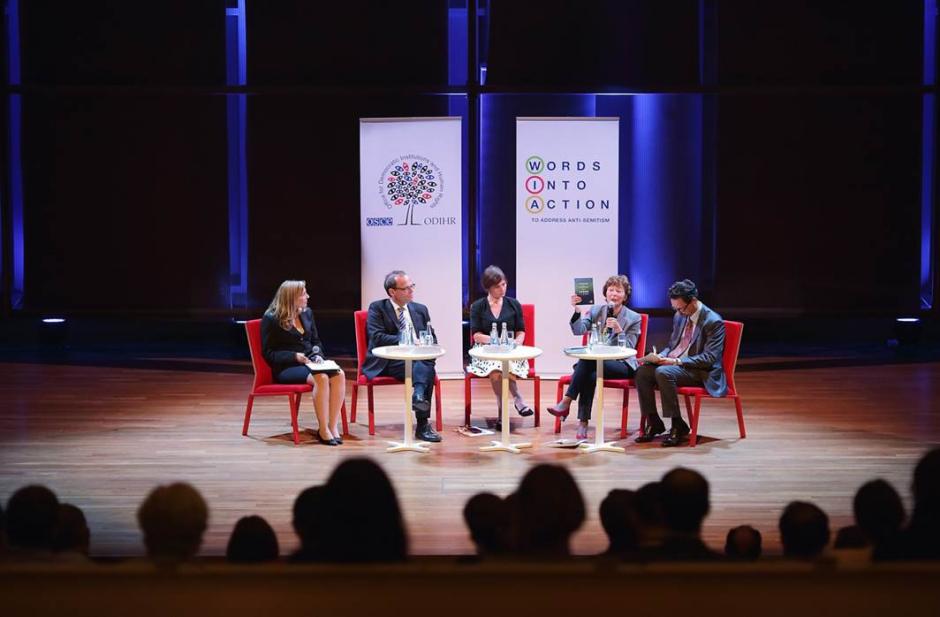
A discussion organized as a side event during the Human Dimension Implementation Meeting, Warsaw, 30 September 2016. (OSCE/Piotr Markowski)
Europe’s largest annual human rights conference - the Human Dimension Implementation Meeting - brings together hundreds of government officials, international experts, civil society representatives and human rights activists to take stock of how OSCE participating States are implementing their commitments in the human dimension. Over a two-week period, participants discuss developments related to democracy, human rights and fundamental freedoms. This meeting is organized by the OSCE Office for Democratic Institutions and Human Rights.
Economic and Environmental Forum
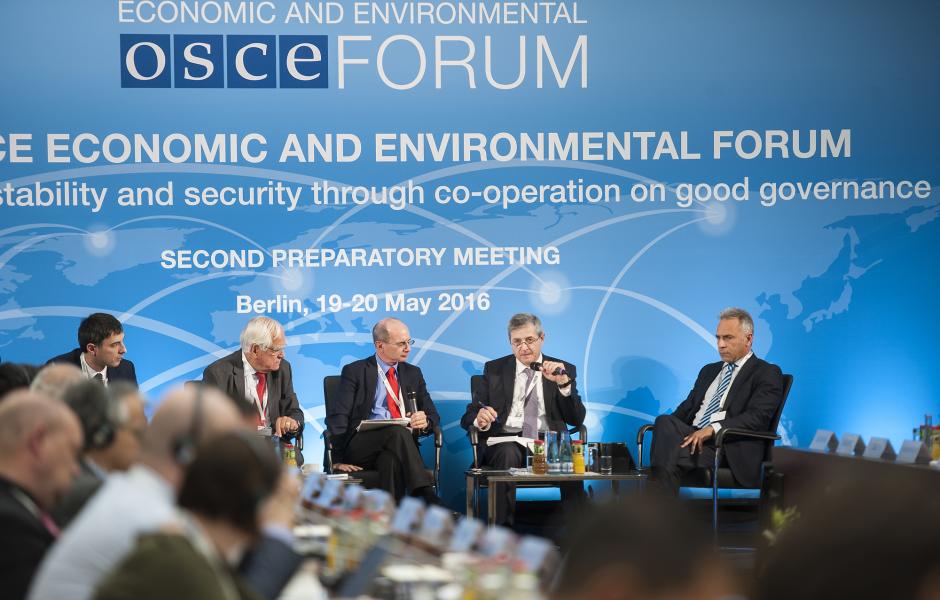
Panelists during an OSCE Economic and Environmental Forum Preparatory Meeting, Berlin, 19 May 2016. (photothek.net/Florian Gaertner)
The Economic and Environmental Forum is the main annual meeting of the OSCE dealing with economic, environmental and security questions. More than 400 representatives from government, civil society, business and international organizations regularly participate in the event. Its key task is two-fold: to inject political stimulus into the debate; and to help draft recommendations and define follow-up action on such issues as energy security, migration, water management and good governance.
Security Days
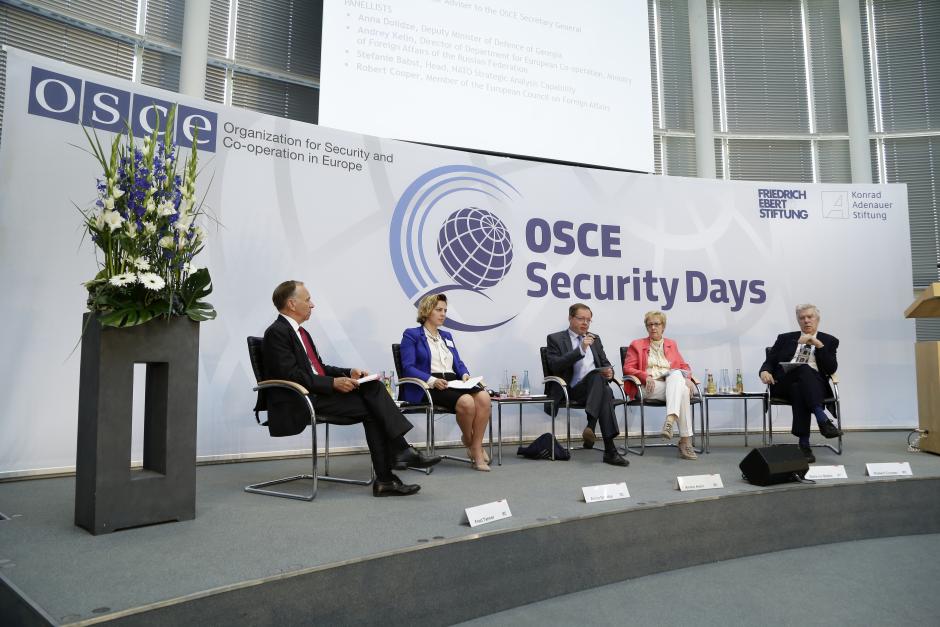
A panel discussion on restoring stability and predictability in the politico-military sphere at Security Days, Berlin, 24 June 2016. (OSCE/FES/Reiner Zensen)
Launched in 2012 by Secretary General Lamberto Zannier, OSCE Security Days gather prominent experts from government, think tanks and academic institutions, civil society, youth, and media, to engage with each other and with the OSCE participating States and Partners for Co-operation in an informal and interactive discussion on 21st-century security threats and challenges.