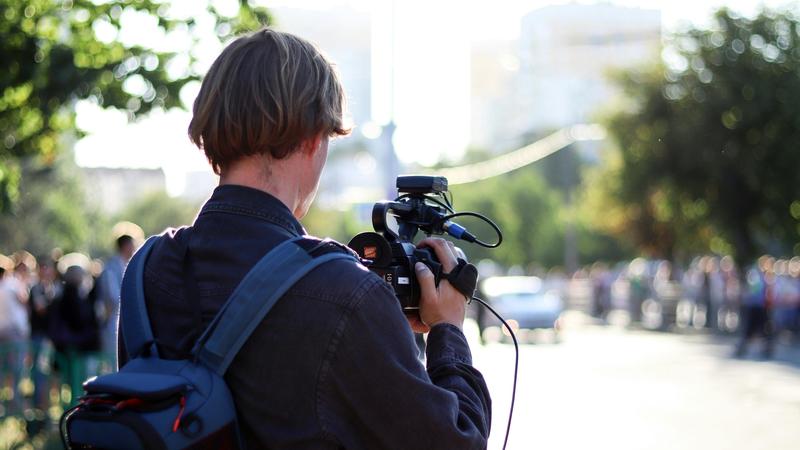
Every journalist strives to grab an ‘exclusive’, to tell a story first that hasn’t yet been told. Reporting on the conflict in Ukraine has pushed journalists to take great risks along the frontlines, feeding the public’s insatiable desire for information and editors’ demands to stay ahead of the competition.
Sixty-one media professionals were kidnapped in the east of Ukraine in 2014, says the Ukrainian media watchdog, the Institute of Mass Information. (PDF)
Recognizing that it would be impossible to ban journalists from the frontlines, Ukraine’s Ministry of Defence asked the OSCE Project Co-ordinator in Ukraine to help establish regular training courses for media professionals.
Lana Borisova, a newspaper reporter from Lviv, was among the beneficiaries, having undergone one of a series of five Hostile Environment Awareness Training (HEAT) courses organized by the OSCE Project Co-ordinator from 11 November to 5 December 2015.
“Many journalists simply don’t realize that without knowing the basics of first aid and weapons awareness they endanger both themselves and their teams,” cautions Borisova.
Yet local journalists in Ukraine often head to the frontline without the necessary and potentially life-saving know-how of how to report from a conflict zone, she says, because training opportunities are scarce and often expensive.
OSCE Resources
While the OSCE Project Co-ordinator's task is to help the government implement its international commitments, the OSCE Representative on Freedom of the Media Dunja Mijatović monitors the situation in Ukraine closely, bringing attention to violations of free media, in particular journalists’ safety and restrictions of media plurality. In her reports and public statements she has addressed over 250 attacks of journalists.
Report by the OSCE Representative on Freedom of the Media “Media Freedom under siege in Ukraine”
This report is a comprehensive overview of the activities, interventions and an assessment of the situation in Ukraine between 28 November 2013 and 23 May 2014 by the OSCE Representative on Freedom of the Media, Dunja Mijatović.