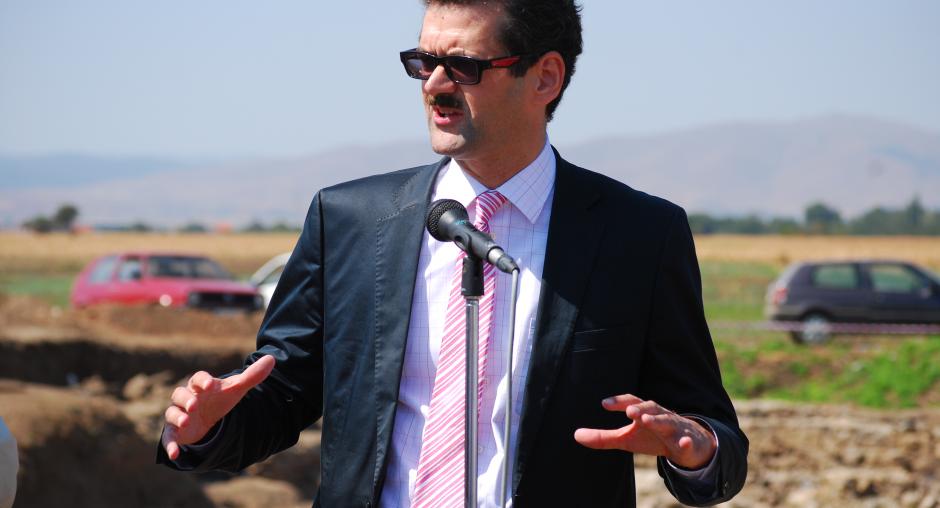
A two-week Archaeological Youth Camp was organized by the OSCE Mission in Kosovo and the Kosovo Archaeological Institute at the Ulpiana historic site near Gračanica/Graçanicë, central Kosovo, for 20 young people from Kosovo Albanian, Serbian, Roma and Turkish communities
The aim of the camp, organized annually since 2004, was to help raise awareness about the existence, diversity and the value of cultural and religious heritage sites in Kosovo and the need to protect them.
In addition to the excavation works at Ulipana, visits were also organized to the historic centre of Prizren, Visoki Dečani Monastery and Novobërdë/Novo Brdo medieval castle.
-
Photo 1 of 9
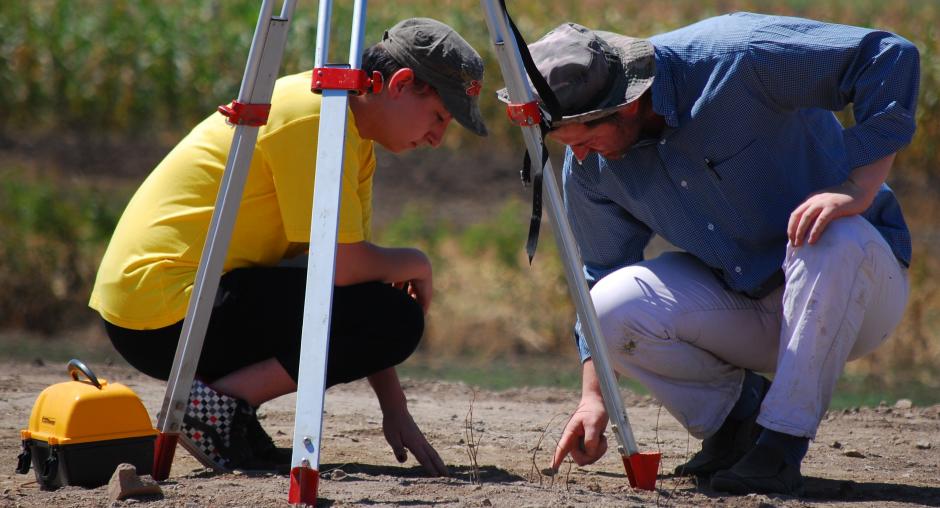
A youth camp participant and an archaeologist examine the ground at the historic site of Ulpiana, central Kosovo, looking for artefacts, 22 August 2011. (OSCE/Hasan Sopa)
-
Photo 2 of 9
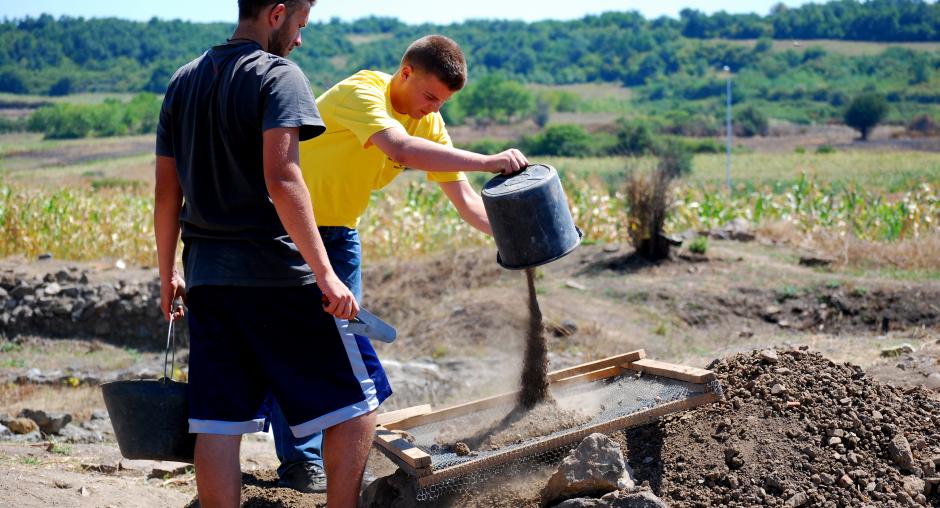
Students begin by first digging at the camp, near Gračanica/Graçanicë. (OSCE/Hasan Sopa)
-
Photo 3 of 9
The students then separate their findings, looking for clues about their common past. (OSCE/Hasan Sopa)
-
Photo 4 of 9
An archaeologist teaches a student how to level the ground. (OSCE/Hasan Sopa)
-
Photo 5 of 9
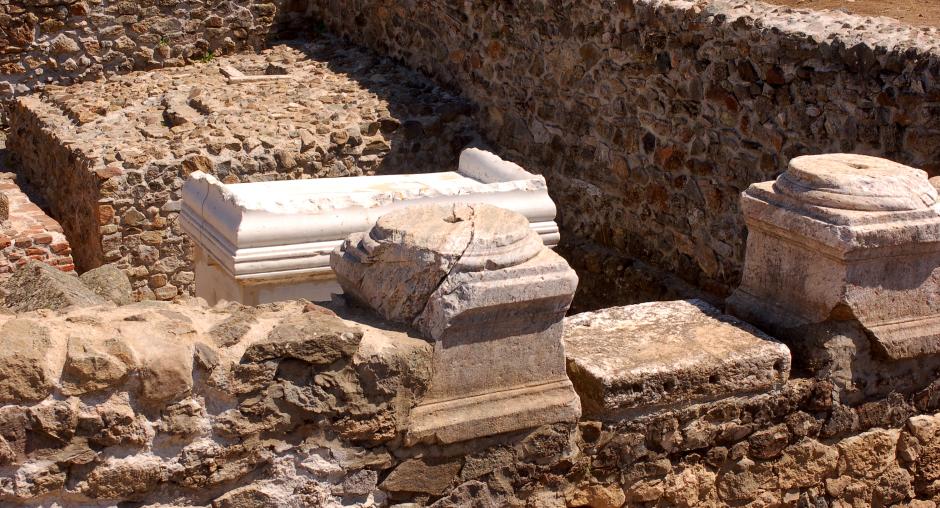
An exposed part of the dig at Ulpiana shows a recently-fixed sarcophagus cover. (OSCE/Hasan Sopa)
-
Photo 6 of 9
Students learn how to record their archaeological findings at the camp for later analysis. (OSCE/Hasan Sopa)
-
Photo 7 of 9
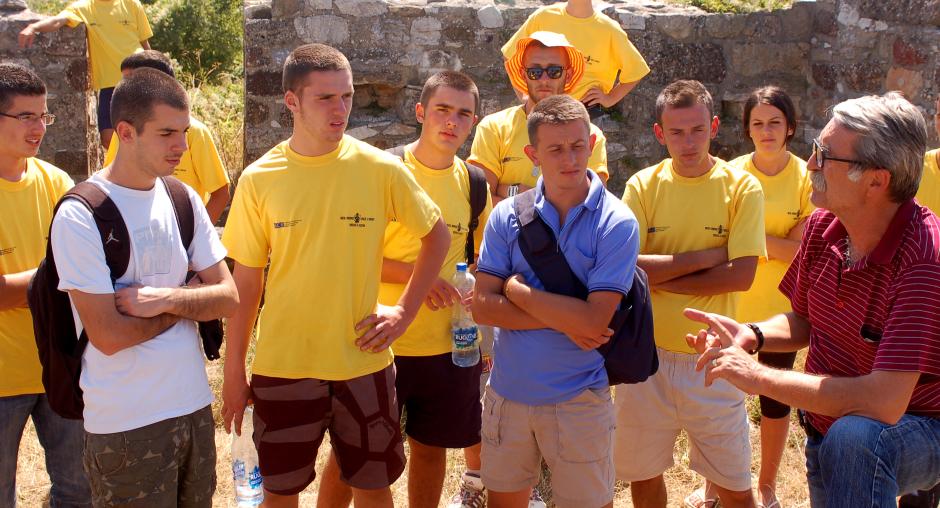
Archaeologist Kemajl Luci explains the history of the ancient castle of Novobërdë/Novo Brdo to students, on a trip away from the Ulpiana camp. (OSCE/Hasan Sopa)
-
Photo 8 of 9
Ambassador Werner Almhofer, the Head of the OSCE Mission in Kosovo, awards a certificate of participation to one of the students, 7 September 2011. He said: "My hope is that these young people will, following these activities, be more motivated to protect and promote the diverse religious and cultural heritage present in Kosovo and that they will be looking to do so together." (OSCE/Besfort Oruci)
-
Photo 9 of 9
“This implies having respect for the religion, history and the culture of the other and not expressing political or other agitation through the acts of vandalism or intimidation,” Ambassador Almhofer added. (OSCE/Besfort Oruci)